
TL;DR
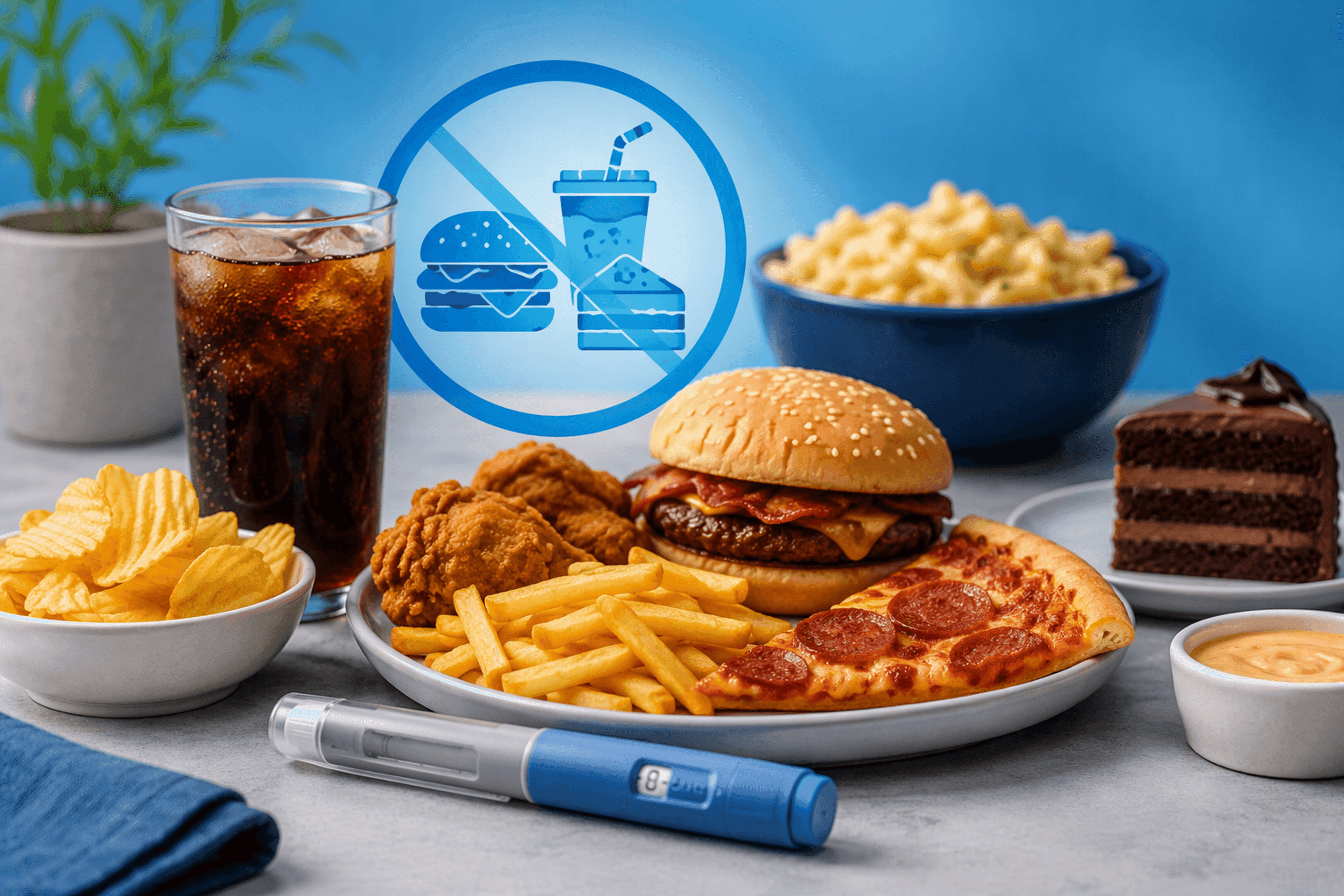
There is no universal list of foods to avoid on Ozempic. Large portions and foods high in fat, sugar, spice, or carbonation may worsen nausea, reflux, bloating, or fullness. We recommend smaller meals, steady fluid intake, lean protein, and adjusting food choices according to symptoms.
Foods to avoid on Ozempic when nausea or fullness gets worse
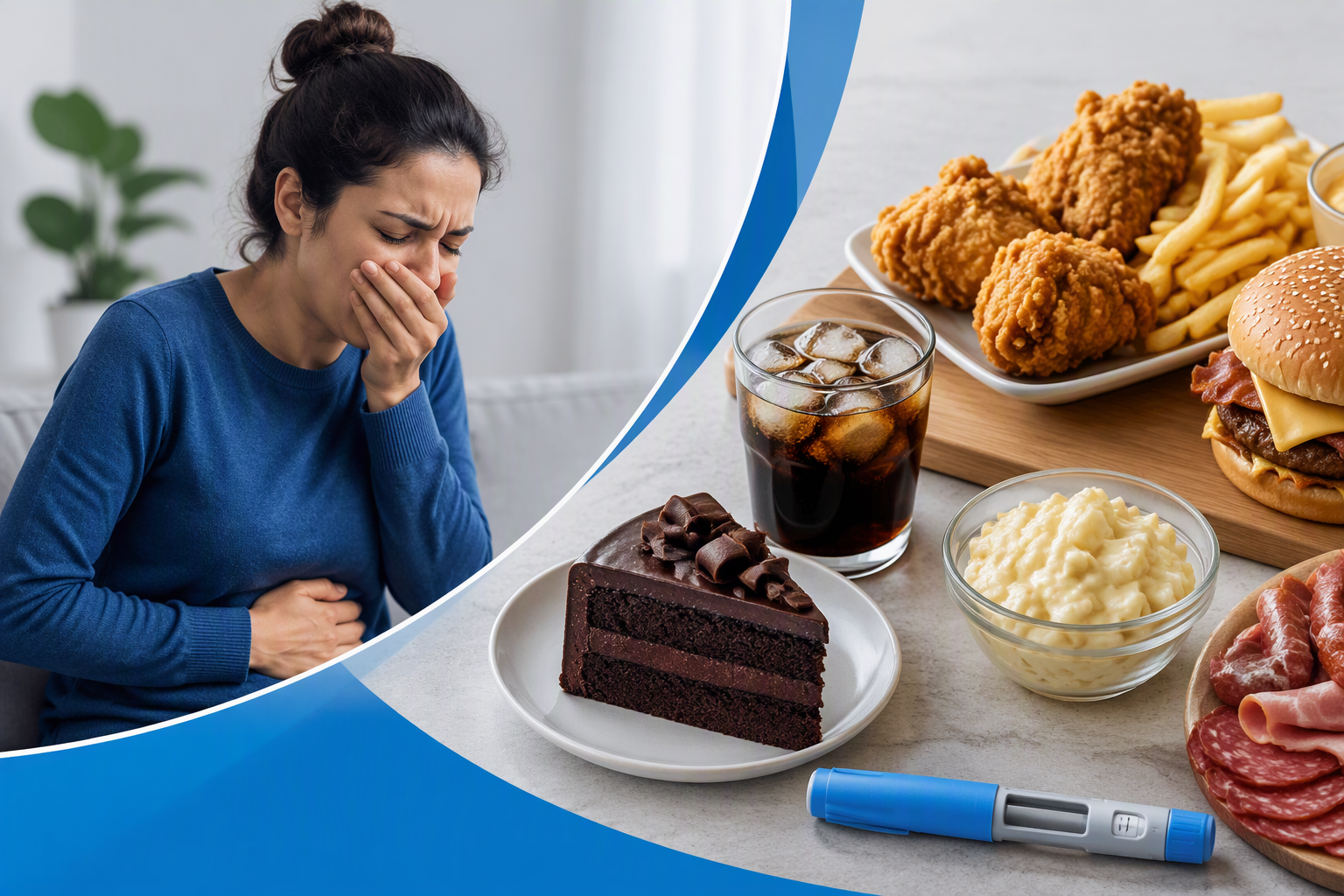
Foods to avoid on Ozempic depend largely on individual tolerance. Rather than banning entire food groups, we recommend reducing foods that aggravate symptoms and testing a smaller or lighter serving later.
| Food type | Symptom it may worsen | Alternative |
|---|---|---|
| Fried food | Nausea, reflux, fullness | Baked or grilled food |
| Fatty meat | Fullness, belching | Lean chicken, turkey, or fish |
| Rich dairy | Nausea, diarrhea | Lower-fat yogurt or cottage cheese |
| Spicy food | Reflux, nausea | Mild seasoning |
| Refined sweets | Nausea, blood sugar changes | A small fruit serving |
| Sugary drinks | Diarrhea, limited satiety | Water or unsweetened drinks |
| Carbonated drinks | Pressure, bloating | Still water |
| Alcohol | Nausea, reflux, dehydration | A nonalcoholic still drink |
Fried, greasy, and high-fat meals
Fried chicken, pizza, creamy pasta, sausage, and fries combine substantial fat with a large meal volume. They may worsen nausea, reflux, or prolonged fullness.
Choose grilled or baked foods, leaner cuts, and modest servings. Pause before taking more rather than eating until discomfort develops.
Large portions and heavy meals
A familiar portion may feel too large after starting treatment or increasing the dose. Serve less, eat slowly, and stop when fullness begins.
There is no need to finish the plate. A small meal later may be more comfortable than one heavy meal.
Sugary, carbonated, spicy, and highly processed foods
Sugary drinks add concentrated sugar without making a balanced meal. Carbonation may increase pressure when bloating or fullness is already present.
Spicy food is not automatically off-limits, but it may aggravate reflux or nausea. Processed snacks can also combine fat, sugar, and large portions in an easy-to-overeat form.
Alcohol while taking Ozempic
Alcohol may worsen nausea, diarrhea, reflux, and dehydration. The risk depends on the amount consumed, food intake, health conditions, and other medicines.
Low blood sugar deserves particular attention when Ozempic is used with insulin or a sulfonylurea. We recommend asking the prescriber to review the full medication list before drinking.
Why Ozempic can change how meals feel
Ozempic contains semaglutide, a GLP-1 receptor agonist. It can delay how quickly food leaves the stomach, contributing to early fullness, nausea, bloating, belching, or reflux.
Symptoms may become more noticeable after treatment begins or the dose changes. Do not adjust the dose without instructions from the prescriber.
Why a dose increase may worsen nausea
Some people experience more digestive discomfort after dose titration. Smaller portions, simple foods, and steady fluids may be easier to manage during this period.
Contact the prescriber if symptoms interfere with eating, drinking, sleep, work, or taking other medicines. Semaglutide microdosing and low-dose treatment still require clinical oversight.
Portion size may matter more than the food name
A small lean burger differs from a double burger served with fries and a milkshake. The larger meal adds more fat and volume, both of which may make symptoms harder to manage.
Test a modest serving, eat slowly, and check fullness before continuing.
What to eat on Ozempic to avoid nausea
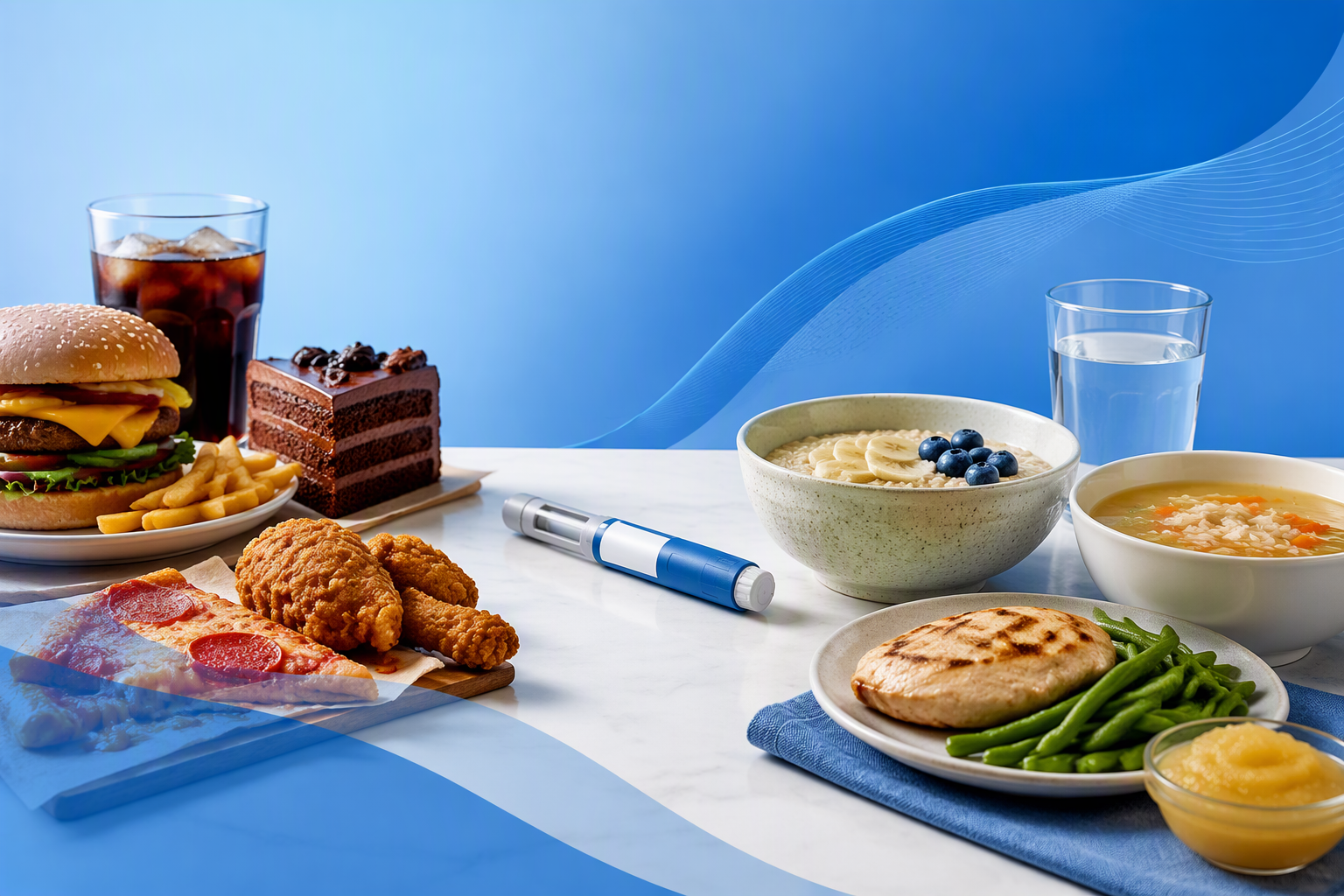
During short periods of nausea, simple foods may be easier to tolerate:
- Toast or crackers
- Rice or oatmeal
- Bananas or applesauce
- Broth or soup
- Plain potatoes
Cool or room-temperature food may help when cooking smells are unpleasant. Small meals or snacks can also feel more manageable than a full plate.
These foods are not a complete long-term diet. Once nausea eases, add protein and a wider range of nutrient-rich foods.
A simple plate for a mild-nausea day
Pair a tolerated starch with a small protein serving. Options include toast with yogurt, rice with chicken, or crackers with cottage cheese.
Add broth, fruit, or cooked vegetables as tolerated. Rich sauces and large drinks may be easier to manage separately from meals.
Foods to add back when nausea eases
Start with tolerated proteins, followed by fruit, vegetables, whole grains, and modest amounts of unsaturated fats.
Change one part of the meal at a time. This can help identify whether the food, portion size, or fat content triggered symptoms.
Keep protein and fluids steady when appetite is low
Eating as little as possible is not a safe shortcut to weight loss. Inadequate intake may contribute to dehydration, weakness, and poor nutrition.
Our GLP-1 diet plan for regular and low-appetite days includes meal structures that can be scaled down while retaining protein and fluids.
Lower-fat protein choices
Practical options include:
- Eggs
- Fish
- Chicken or turkey
- Tofu
- Beans, if tolerated
- Lower-fat cottage cheese
- Greek yogurt
When fullness is strong, yogurt, cottage cheese, tofu, or blended soup may feel easier than a large portion of meat.
Hydration without adding stomach pressure
Sip fluids throughout the day rather than drinking a large amount with a meal. Water and broth are straightforward choices. A clinician or pharmacist can advise whether an oral rehydration drink is appropriate after vomiting or diarrhea.
Dark urine, reduced urination, dry mouth, dizziness, or unusual weakness may indicate dehydration.
Can you have hamburgers, cheese, eggs, fruit, or coffee on Ozempic?
These foods are not universally prohibited. Portion size, fat, acidity, caffeine, preparation, and current symptoms all affect tolerance.
We suggest keeping a short food-and-symptom log after dose changes.
Hamburgers
A hamburger can fit if it is tolerated. Choose a smaller lean patty and limit rich sauces. A large burger with fries will usually contain more fat and volume.
Cheese and eggs
A modest serving of lower-fat cheese may be easier to tolerate than pizza or a rich cheese-based meal.
Eggs provide protein. Boiled or poached eggs may feel lighter than eggs fried in butter. Reduce either food if it worsens nausea or reflux.
Fruit
Fruit does not require a blanket ban. Start with a small serving if acidity, peel, sweetness, or fiber aggravates symptoms.
Banana and applesauce may work during nausea. Return to varied whole fruit as tolerance improves.
Coffee
Coffee is reasonable if tolerated, but it may worsen nausea, reflux, loose stools, or jitters. Try a smaller serving after food and reduce cream or sweet syrups. Coffee should not replace water or meals.
Adjust food choices for constipation, diarrhea, reflux, and bloating
One rule cannot address every GLP-1 side effect. A fiber-rich meal may support constipation but worsen active gas or bloating.
Make gradual changes and contact the prescriber if symptoms persist or intensify.
Constipation
Increase fluids and fiber gradually. Oats, kiwi, prunes, beans, and cooked vegetables are useful options if tolerated.
Gentle activity may also help unless a clinician has advised against it. Adding too much fiber at once can increase gas.
Diarrhea
Prioritize fluids and use simple, lower-fat meals temporarily. Limit alcohol, greasy foods, caffeine, and sugar alcohols if they worsen symptoms.
Seek medical advice if diarrhea persists or signs of dehydration appear.
Reflux and bloating
Reduce meal size, carbonated drinks, rich foods, and late-night eating. Remaining upright after meals may help.
Try fibrous vegetables in smaller, cooked portions rather than removing vegetables from the long-term diet without clinical guidance.
A practical Ozempic grocery list and flexible meal template
Build meals around a lean protein, a tolerated starch, and a small serving of fruit or vegetables. Drink fluids between meals. Our first-month Ozempic grocery list provides additional options.
Foods to keep for rough days
Stock simple staples:
- Starches: Crackers, toast, rice, oatmeal
- Fruit: Bananas and applesauce
- Fluids: Water, broth, and soup
- Proteins: Yogurt, cottage cheese, eggs, tofu, tuna, and cooked chicken
- Vegetables: Cooked carrots, squash, or green beans
A one-day flexible meal example
- Breakfast: Oatmeal, banana, and Greek yogurt
- Lunch: Broth-based soup with chicken or tofu and crackers
- Dinner: Fish or chicken with rice and cooked vegetables
- Snacks: Yogurt, cottage cheese, fruit, or toast
Reduce portions during nausea and add more only when comfortable.
How to test foods after symptoms improve
Add one food or increase one portion at a time. Record the meal, portion, eating speed, fluids, dose timing, and symptoms. Share repeated patterns with the prescribing clinician.
When Ozempic stomach symptoms need medical care
Ozempic’s prescribing information includes warnings involving pancreatitis, gallbladder problems, kidney injury associated with dehydration, and serious allergic reactions.
Contact a clinician promptly if nausea, vomiting, diarrhea, or fullness prevents adequate eating or drinking.
What organ is Ozempic hard on?
There is no single organ-based answer. Severe or persistent abdominal pain may signal a pancreas or gallbladder problem and needs prompt assessment. Dehydration from vomiting or diarrhea can also affect kidney function.
Call the prescriber the same day
Call if symptoms persist, worsen after a dose change, disrupt food or fluid intake, or coincide with repeated low blood sugar while using insulin or a sulfonylurea.
Do not reduce, skip, or increase the dose without instructions.
Seek urgent care now
Get urgent medical help for severe abdominal pain, repeated vomiting, inability to keep fluids down, fainting, confusion, very little urine, trouble breathing, or swelling of the face, lips, tongue, or throat.
Ozempic diet questions
Nutrition needs vary with health conditions, treatment goals, symptoms, and other medicines. The prescribing care team should address persistent side effects and dose questions.
What is the best food to eat while taking Ozempic?
There is no single best food. We favor small meals containing lean protein, a tolerated starch, fruit or vegetables, and steady fluids.
How do I speed up weight loss on Ozempic?
Do not skip meals, restrict fluids, or alter the prescribed dose to force faster weight loss. Discuss progress, side effects, activity, sleep, and treatment expectations with the clinician.
Do I need to follow a special Ozempic diet?
No single Ozempic diet suits everyone. Meal size, fat content, eating speed, symptoms, and medical needs should shape the plan.
FAQ
Can I eat a hamburger while taking Ozempic?
Yes, if tolerated. A small lean burger with limited sauce may be easier to manage than a larger, fattier meal with fries.
Should I avoid all fat on Ozempic?
No. Fat is part of a balanced diet, but rich or fried meals may worsen digestive symptoms. Use smaller amounts and choose foods that feel comfortable.
What can I eat when Ozempic causes nausea?
Try toast, rice, crackers, oatmeal, banana, applesauce, broth, or plain potatoes. Add a small amount of protein when possible and broaden the diet as nausea eases.
When should I call my prescriber about side effects?
Call when symptoms persist, worsen, interfere with eating or drinking, or prevent other medicines from being taken. Severe pain, repeated vomiting, breathing difficulty, or signs of serious dehydration require urgent care.
Get help with your GLP-1 treatment
Persistent nausea, poor fluid intake, or new symptoms need clinical review. Contact usetemi.com to discuss prescription refills, GLP-1 care, and dose questions with a qualified care team.