TL;DR
Travel with prescription medication starts with a supply count, not a packing list. For an early refill before travel, contact the prescriber, pharmacy, and insurer in that order. TSA rules cover screening, while pharmacies, state laws, airlines, customs agencies, and destination countries set other limits.
Travel With Prescription Medication: Start With a 10-Minute Supply Check
Your flight leaves Friday. The pharmacy says the refill is too soon. That answer may involve three decisions: whether the prescriber authorizes treatment, whether the pharmacy can dispense, and whether the insurer will pay.
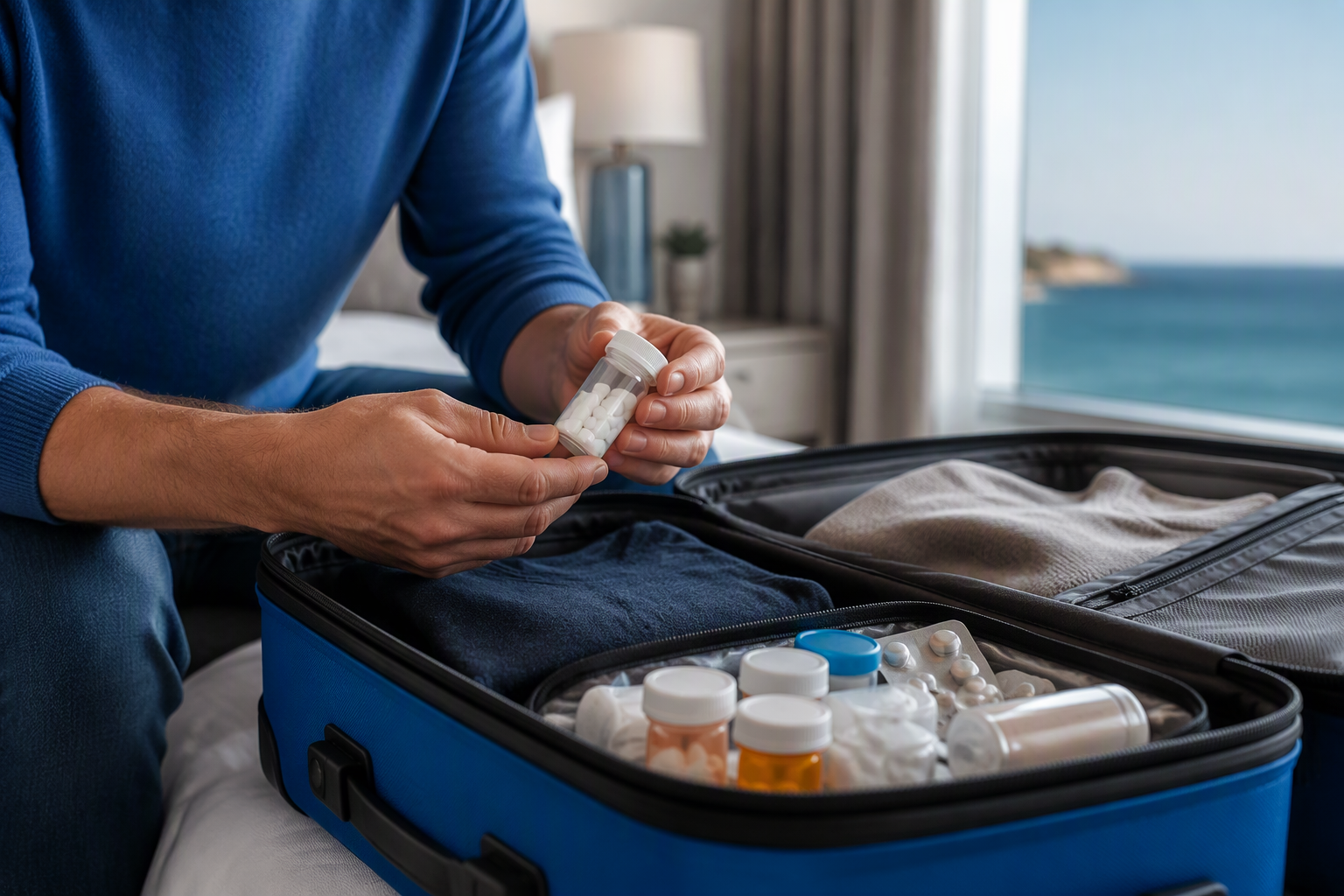
Start by counting each dose on hand. Compare that count with the departure date, trip length, return date, and a reasonable delay buffer. Then record:
- Drug name, strength, and form
- Dose and schedule
- Prescription number
- Prescriber and pharmacy
- Current refill date
- Doses remaining
- Storage needs
Use the smallest practical supply that covers the trip and likely delays. Prescription quantities and destination rules still apply.
We recommend starting one to two weeks before domestic travel. Start earlier for international trips, controlled drugs, prior authorization, shortages, or drugs that a pharmacy must order.
Leaving within 72 hours: Call the prescriber and pharmacy today. State the exact departure deadline. Ask about approval and stock separately. Neither is guaranteed.
A patient leaving in 10 days with six daily doses has a four-day gap before considering delays. That patient may need a new prescription or refill authorization, pharmacy stock confirmation, and an insurer travel override.
Information to Gather Before the First Call
Write down the travel dates, destination, trip length, departure deadline, current supply, dose, and preferred pharmacy. Note whether insurance or cash will pay.
Also identify storage needs. A drug that requires refrigeration, light protection, or special handling needs a product-specific packing plan.
How Much Medication Can You Travel With?
There is no single limit for every trip. TSA screening rules, prescription quantities, insurer limits, state law, airline rules, and destination law answer different questions.
For international travel, check the destination’s embassy, consulate, customs service, or health authority. Verify the permitted drug, active ingredient, dose, and quantity. Check transit countries too.
How to Get an Early Refill Before Travel
Use this call order:
- Prescriber
- Dispensing pharmacy
- Insurer, if coverage is the barrier
The prescriber authorizes treatment. The pharmacy decides whether it can legally and safely dispense the order. The insurer decides whether it will pay.
Ask the pharmacy about stock, the earliest fill date, transfer rules, partial fills, and processing time. A travel override prescription request can still fail if the drug is unavailable or the prescription cannot yet be filled.
Each step may add time. Controlled drugs, dose changes, prior authorization, limited stock, and shortages can delay or block an early refill before travel.
For routine long-term drugs, refill planning matters even when no flight is booked. Our guide to statins and refill planning shows why consistent access should be part of ongoing treatment.
What to Ask the Prescriber
Give the prescriber five facts:
- Exact departure date
- Number of doses remaining
- Length of the supply gap
- Dose and destination
- Pharmacy name and location
Ask whether a new prescription, a different quantity, or a written travel schedule is appropriate. A clinical review may be needed before the prescriber changes the order.
What to Ask the Pharmacy
Confirm that the prescription is valid and the drug is in stock. Ask whether the requested quantity can be dispensed before departure.
Then ask what remains unresolved. It may be prescriber approval, an insurer rejection, a legal limit, pharmacy policy, or an order that has not arrived.
If another pharmacy may be needed, review our pharmacy guides for cash-pay and mail-order options. Confirm transfer rules and delivery timing before relying on a new pharmacy.
What to Ask the Insurer
Request a vacation or travel override only after confirming that the prescription and pharmacy can support the fill. An override addresses coverage. It does not authorize the prescription or force the pharmacy to dispense it.
Ask about:
- Quantity limits
- Prior authorization
- Network restrictions
- Override dates
- Patient cost
- Effect on the next covered refill
Why Cash Payment Does Not Guarantee an Early Refill
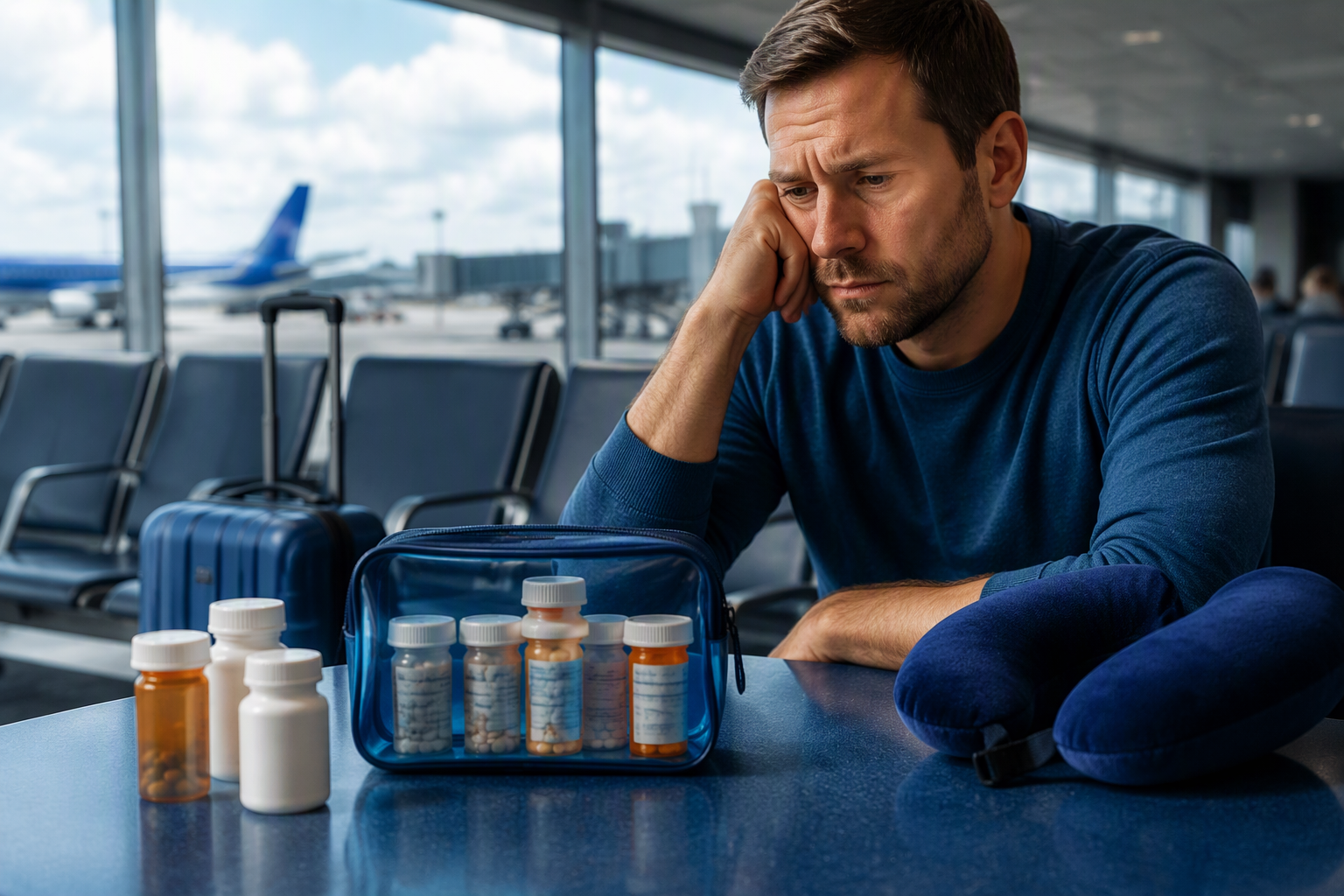
Cash payment can remove an insurance rejection from the process. It does not change the prescription directions, refill date, pharmacy policy, quantity limits, state law, or controlled-substance rules.
For example, a cash-pay patient may request another 30-day supply before the refill date. The pharmacy may still need prescriber approval. It may also decline based on its policy or applicable law.
Do not fill overlapping prescriptions at several pharmacies without clear coordination between the prescriber and pharmacists. That can create safety, record, and dispensing concerns.
Telehealth may speed up a clinical review. It cannot create local stock or force a pharmacy to dispense. Controlled-drug prescribing also follows separate rules, covered in our 2026 DEA telehealth prescribing update.
When Cash Payment May Help
Cash may help when insurance coverage is the only barrier and the pharmacy can legally dispense the refill. Confirm the full price before approving the order.
Ask whether the cash fill will affect a later insurance claim or the next covered refill. Do not assume the insurer will reimburse the purchase.
When Cash Payment Will Not Solve the Problem
Cash will not cure:
- An expired prescription
- No refills remaining
- An unsafe dose request
- A stock shortage
- A pharmacy refusal
- A legal restriction
Controlled drugs may have strict federal and state requirements. A flight or hotel booking does not waive them.
TSA Rules for Pills, Liquids, Injectables, Needles, and Ice Packs
TSA controls airport screening in the United States. It does not decide whether a pharmacy may dispense a drug or whether another country permits possession.
Medically necessary liquids may exceed the standard 3.4-ounce limit. Declare them for separate screening. Officers may inspect the medication and cooling supplies.
Keep pills, pens, vials, needles, pumps, alcohol pads, and cooling packs together. Make them easy to remove from the carry-on.
Unused syringes are generally permitted when accompanied by injectable medication. Place used sharps in a safe disposal container. Check current TSA guidance before departure because screening procedures can change.
Can Prescription Pills Go Through Security?
Yes. Prescription pills can pass through domestic airport security.
TSA does not generally require pills to be in their original prescription bottles. Labeled pharmacy packaging remains the lower-risk choice because state authorities, customs officials, or a replacement pharmacy may ask for proof. Avoid mixing several drugs in one unmarked container.
Can You Bring Needles and Injectable Medication on a Plane?
Yes, subject to screening. Pack unused needles with the prescribed injectable medication and its label or supporting documents.
Keep the full injection set together. Declare liquid medication and cooling supplies when required. A clear layout can make separate screening easier.
What Is the Liquid Limit for Medication?
The standard carry-on liquid limit is 3.4 ounces per container. Medically necessary liquids may exceed that amount.
Declare larger medical liquids before screening. TSA officers may use added screening methods and inspect ice packs or cooling cases. This exception does not settle airline or destination-country rules.
Pack Medication in Your Carry-On, With Proof
Keep medicine in a carry-on. Checked bags can be lost, delayed, heated, or exposed to freezing temperatures.
Use the original labeled package when practical. Add a prescription copy, medication list, and clinician letter for injectables, controlled drugs, or complex treatment plans. St. Jude’s travel guidance also recommends keeping medicine details and emergency contacts available.
Do not place all medicine in one bag if a lawful backup arrangement is possible. Keep the working supply under the named patient’s control.
Save prescriber, pharmacy, insurer, and emergency contacts on the phone and offline. A paper copy still works when a battery or connection fails.
A Compact Document Set
Carry documents that show:
- Generic and brand names
- Dose and directions
- Prescriber contact details
- Pharmacy information
- Prescription number
- Reason for needles, pumps, or cooling supplies
Use translated records when the destination authority recommends or requires them. Ensure the name on the medicine matches the traveler’s identification.
Can You Carry Medication for Someone Else?
Security screening is only one issue. Possession, labeling, controlled-drug law, and customs rules may also apply.
When possible, the named patient should carry the medicine. If another person must carry it, use the patient’s labeled package and supporting documents. Check the laws that apply at departure, transit, and arrival.
How to Travel With Refrigerated Medication and GLP-1 Pens
Check the storage instructions for the exact product, pen type, and strength. GLP-1 pens do not share one room-temperature limit.
Record four facts from the label:
- Required refrigerator range
- Allowed room-temperature period
- Light restrictions
- Conditions that require disposal
Use an insulated case only when the product needs it. Keep the pen away from direct contact with ice, frozen packs, or cooling elements. A pen can freeze even when the case feels cold rather than frozen.
Do not use a pen that froze. If it became too hot or cold, contact a pharmacist or the manufacturer with the product name, temperature, and exposure time.
Keep GLP-1 pens in the carry-on. Aircraft holds, parked cars, and direct sun may expose them to unsafe temperatures.
Build a Product-Specific Storage Plan
Check how long unopened and in-use pens may remain at room temperature. Do not apply another GLP-1 product’s instructions to the pen in hand.
Write down when the pen left refrigeration and its maximum labeled use date. For a four-hour flight followed by a long ground transfer, calculate the whole travel period rather than the flight alone.
Pack Cooling Supplies Without Freezing the Drug
Place a barrier between the medicine and cooling packs. Avoid loose ice and direct contact with frozen material.
Use a temperature monitor if the manufacturer or pharmacist recommends one. A generic cooler cannot prove that the drug stayed within its permitted range.
What to Do After a Temperature Excursion
Do not judge safety by the pen’s appearance. Note the estimated temperature, exposure time, product, and strength.
Contact a pharmacist or manufacturer. Replace the medication when safe use cannot be confirmed. Never use medication known to have frozen.
International Travel Adds Customs and Possession Rules
“TSA allows it” is not a complete answer. TSA controls U.S. screening. The destination country controls entry and possession.
Check the destination embassy, consulate, customs service, or health authority. Verify:
- Whether the active ingredient is legal
- Dose and quantity limits
- Advance permit requirements
- Customs declaration rules
- Required letters or translations
- Rules in transit countries
Do not mail medicine abroad or assume a U.S. prescription can be filled there. Import and prescribing laws may block both options.
Check the Active Ingredient, Not Only the Brand
Brand names vary by country. Search using the generic drug name and any controlled ingredient.
Check every country entered. An airport transfer may still require border entry if luggage must be collected or the traveler leaves the secure transit area.
Prepare for Customs
Keep medication in labeled packaging with matching prescription proof and identification. Carry only the quantity permitted for the trip.
Declare the medicine when required. A 90-day prescription from a U.S. clinician does not prove that another country permits a 90-day supply.
Plan for Replacement Limits
A U.S. prescription may not be valid abroad. A local clinical visit and local prescription may be required.
Telehealth cannot guarantee legal possession, customs clearance, or a replacement supply in another country. Research local clinics and pharmacies before departure.
Dose Timing, Delays, Loss, and Damage
Ask the prescriber or pharmacist for a written time-zone schedule. Do not double a dose to match the local clock.
Use the missed-dose instructions for the exact drug. Weekly GLP-1 products can have different instructions, so one product’s rule should not be used for another.
If medication is lost or stolen, contact the prescriber, pharmacy, and insurer. File a local report if the insurer or authorities require it.
If a drug overheats, freezes, leaks, or breaks, isolate it. Ask a pharmacist or manufacturer whether it remains usable.
Cross Time Zones Without Guessing
Base the schedule on the normal dose interval, departure time, arrival time, and the drug’s timing limits. A weekly-dose patient should obtain written instructions before crossing several time zones.
Set alarms before departure. Keep the written schedule with the medicine rather than only in an online account.
If a Flight or Refill Is Delayed
Do not stretch, split, or change doses unless a clinician or pharmacist confirms the plan. A lower or delayed dose may not be safe for the specific drug.
Use the contact list and prescription documents to seek a lawful local supply. Our prescription refill support can help patients identify the next steps, but pharmacy stock and approval remain separate.
If Medication Is Lost, Stolen, or Unusable
Record the drug, dose, quantity, event, time, and location. Keep receipts and reports related to replacement.
Seek urgent care when missed treatment could cause harm or severe symptoms. Do not use a damaged, contaminated, overheated, or frozen drug when safety cannot be confirmed.
Prescription Travel Questions
How Early Should I Request a Refill Before Travel?
Start at least one to two weeks before domestic travel. Allow more time for international trips, controlled drugs, prior authorization, or limited stock. If departure is within 72 hours, contact the prescriber and pharmacy now, but do not assume either can complete the refill.
Is an Insurance Travel Override the Same as Refill Approval?
No. A travel override addresses whether the insurer will cover an early claim. It does not replace a valid prescription, change pharmacy policy, create stock, or waive legal limits. Confirm the prescriber and pharmacy requirements before asking the insurer to process an override.
Can I Bring More Than 3.4 Ounces of Liquid Medication Through TSA?
Yes, medically necessary liquids may exceed the standard 3.4-ounce limit. Declare them for separate screening before the inspection begins. Officers may inspect the medicine and cooling supplies. Review the current TSA medication rules before departure because procedures can change.
Do Prescription Pills Need to Be in the Original Bottle?
TSA does not generally require prescription pills to be in their original bottles. We still recommend labeled packaging because state laws, customs officers, and replacement pharmacies may require proof. Keep a medication list or prescription copy with the medicine in the carry-on.
Can I Take Prescription Medication on a Plane for Someone Else?
Possibly, but airport screening does not settle possession, labeling, or customs law. The named patient should carry the medicine when possible. Otherwise, use the patient’s labeled package and documents. Check departure, transit, and destination rules before carrying another person’s medication.
FAQ
How Much Medication Can I Travel With?
There is no universal amount. The permitted supply depends on the prescription, pharmacy rules, insurer limits, state law, and destination-country law. Carry enough for the trip plus a reasonable delay buffer, subject to those limits. Confirm international quantity rules with the destination’s embassy, customs service, or health authority.
Can You Bring Needles on a Plane?
Yes. Unused needles are generally permitted when they accompany injectable medication. Pack the needles, medicine, label, and related supplies together in a carry-on. Declare medically necessary liquids and cooling items when required. Place used needles in a safe sharps container rather than loose in a bag.
How Do I Travel With Medication That Needs Refrigeration?
Read the storage label for the exact product first. Use an insulated case only when needed, and place a barrier between the drug and cooling packs. Never let a pen touch ice or freeze. If the medicine leaves its stated temperature range, ask a pharmacist or manufacturer whether it remains safe.
What Is the Maximum Amount of Liquid I Can Bring Through TSA Security?
Standard carry-on liquids are limited to containers of 3.4 ounces, but medically necessary liquids may exceed that limit. Declare them for separate screening. TSA officers may inspect the liquid and any cooling packs. Check current TSA procedures before departure and remember that destination rules may impose separate restrictions.
Can I Pay Cash for an Early Prescription Refill?
Cash may help if insurance coverage is the only barrier. It does not change the refill date, prescription directions, pharmacy policy, stock, or applicable law. Confirm that the pharmacy can dispense the order, ask for the full cash price, and check how the purchase may affect the next insurance claim.
Request Refill Support Before the Trip
Count the doses today. If the supply will run short, use Temi’s prescription refill support to start a clinical review and plan the next calls before departure. Approval, pharmacy stock, insurer payment, and travel legality remain separate steps.