TL;DR
The search phrase “microdosing GLP 1” usually refers to taking a lower dose, remaining at a starting dose, or increasing more slowly than usual. It is an informal term, not a standard clinical protocol. There is no universal microdose or safe syringe-unit chart. Any dosing plan must account for the exact drug, product, concentration, device, prescription, health history, and treatment goal.
What does microdosing GLP 1 mean?

“Microdosing” is an informal term. FDA labeling does not define a standard GLP-1 microdose, and major guidelines do not endorse one universal protocol.
People generally use the term to describe:
- Starting below a product’s labeled starting dose.
- Remaining at a lower dose rather than increasing.
- Increasing more gradually than the usual schedule.
These approaches are not interchangeable. Semaglutide, tirzepatide, and liraglutide are different drugs, while products containing the same ingredient may have different devices and instructions.
A clinician may consider a lower dose or slower increase to improve tolerability. We recommend treating that as an individual prescribing decision—not a shortcut or a schedule copied from social media.
Clinical dosing and social-media microdosing are not the same
Labeled titration introduces a medicine gradually, partly to limit gastrointestinal side effects. Social-media “microdosing” may instead involve pen clicks, split injections or copied syringe measurements.
Those practices do not form a recognised clinical protocol. One person’s microdose may be another product’s starting dose, and identical-looking syringe marks may contain different amounts of medicine.
Starting, maintenance, and maximum doses serve different purposes
A starting dose helps introduce treatment and may not be intended for long-term maintenance. A maintenance dose supports ongoing treatment, while the maximum is the highest dose allowed under a product’s labeling.
Not everyone needs the maximum dose. We review response, side effects and treatment goals before recommending an increase. Our tirzepatide 5 mg guide discusses labeled scheduling, plateaus and refill questions.
Why there is no universal GLP-1 microdosing chart
A universal chart could create serious dosing errors. Safe use depends on the active ingredient, brand, concentration, device, indication, previous treatment, other medicines and time since the last dose.
Even products containing the same active ingredient may not have interchangeable schedules or devices. Always follow the current prescription and medication guide for the exact product.
FDA-labeled starting and titration reference
GLP-1 labels generally use product-specific starting, escalation and maintenance instructions. These instructions can change, so we recommend confirming the current schedule in the FDA drug-label database.
A reference schedule cannot tell an individual what to inject. The prescription label and prescriber’s instructions take priority.
Why two charts can give different answers
Charts may refer to different brands, concentrations, devices or treatment goals. Wegovy and Ozempic both contain semaglutide, for example, but that does not make their instructions interchangeable.
Compounded products introduce another variable because concentrations and dispensing instructions can differ between pharmacies. Our compound tirzepatide safety and access guide explains what to check before ordering or using a compounded product.
Why milligrams, milliliters, and syringe units differ
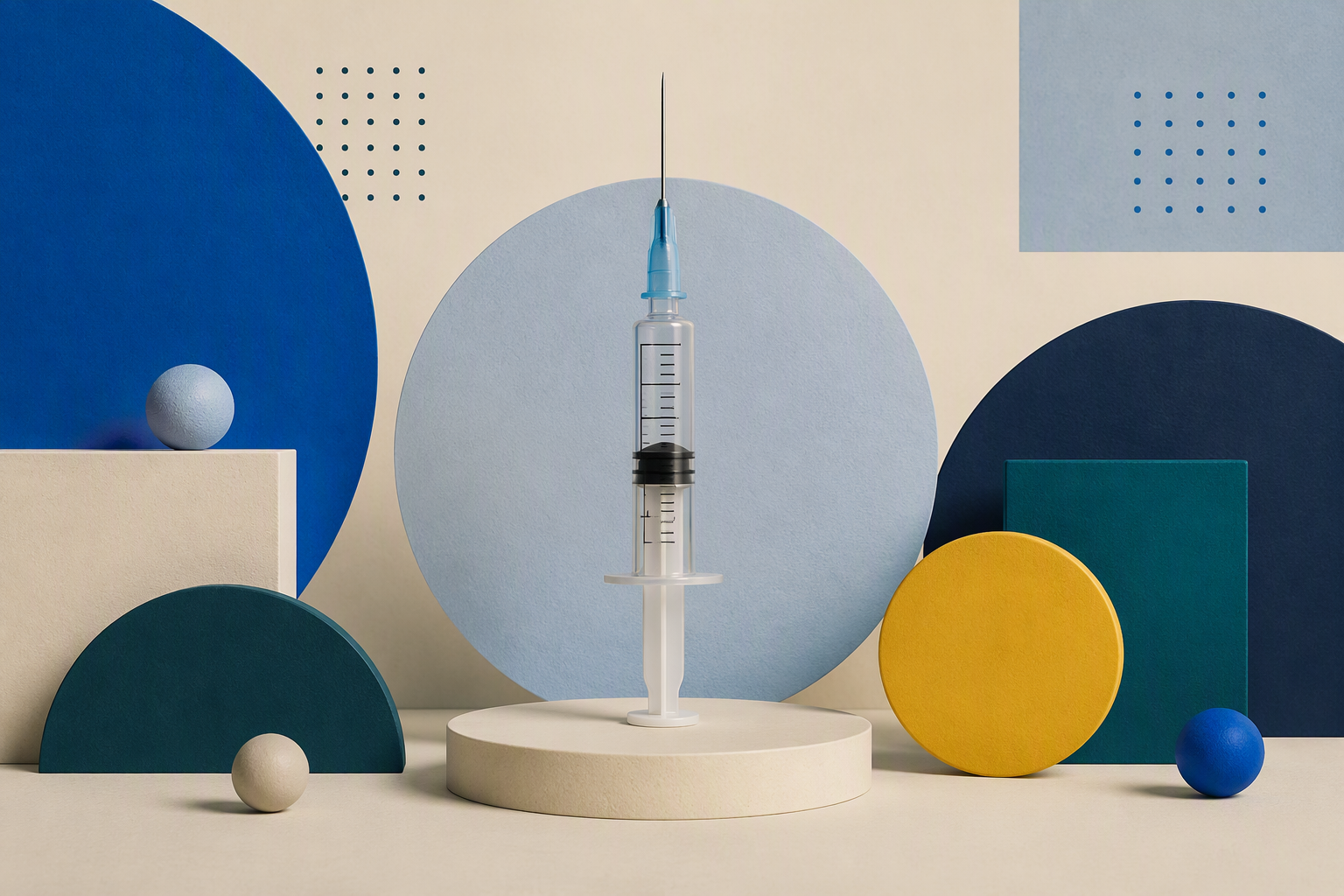
Milligrams measure the amount of drug. Milliliters measure liquid volume. Syringe units are volume markings on a particular type of syringe.
Converting between them requires the exact concentration in milligrams per milliliter. The same syringe mark can represent different drug amounts when vial concentrations differ.
Never copy unit instructions from another vial, pharmacy, chart or social post. Pens and vials may also require different preparation and handling.
A safer way to read a vial label
Before preparing an injection, confirm:
- The drug and product name.
- The total drug amount and liquid volume.
- The concentration.
- The prescribed dose.
- The discard date.
- The storage instructions.
If anything is unclear, stop and contact the dispensing pharmacy or prescriber.
Why pen clicks and syringe marks are not universal doses
Pens vary by drug, strength, device and market. A click count from one pen does not establish a dose on another.
We do not recommend click-count or syringe-unit workarounds for doses a device was not designed to deliver. Check the label again whenever the pen, vial, concentration or pharmacy changes.
Slower titration may help, but lower is not always safer
Nausea, vomiting, reflux, constipation and reduced food intake can occur when treatment begins or a dose rises. A clinician may respond by delaying an increase, reviewing the current dose or changing treatment.
A lower dose may improve tolerability for some people, but it does not remove every risk. Serious symptoms can still occur, and combining a GLP-1 medicine with insulin or certain diabetes drugs may affect blood sugar.
Maximum-dose treatment is not automatic either. Our tirzepatide 15 mg guide explains why response and side effects should be reviewed first.
When to ask for a dose review
Contact the prescriber about persistent nausea, repeated vomiting, severe constipation, worsening reflux, dizziness, or difficulty keeping down food and fluids.
Record dose dates, symptom timing, fluid intake, bowel changes and other medicines. Clear notes help us assess whether to hold, reduce, increase, switch or stop treatment.
When symptoms need urgent or emergency care
Seek prompt medical assessment for severe or constant abdominal pain, pain extending to the back, marked dehydration, blood in vomit or stool, or repeated vomiting.
Call emergency services for fainting, confusion, breathing difficulty, facial or throat swelling, or severe low-blood-sugar symptoms. Our guide to tirzepatide allergic reaction signs and emergency care explains different levels of care.
Why splitting weekly doses creates new risks
Common semaglutide and tirzepatide products use weekly schedules. Dividing a prescribed weekly dose into smaller injections is not the same as slower titration.
Splitting can increase measurement errors, handling, contamination risk, storage problems and confusion after a missed dose. It may also make symptom tracking harder.
Do not split, combine or redraw doses unless the prescriber and dispensing instructions expressly support the plan.
Why a gentler schedule can still be unsafe
Smaller, more frequent injections do not guarantee fewer side effects. Total exposure, timing, individual response and accurate handling still matter.
Changing injection days can also complicate missed-dose rules and make it difficult to identify which dose preceded a symptom.
What to do after a missed dose, treatment gap, or product change
Missed-dose instructions differ by product. Check the current medication guide and contact the prescriber if the next injection date is unclear.
After a treatment gap, restarting the former dose may bring back gastrointestinal symptoms. Do not double a dose unless the exact product instructions specifically tell you to do so.
Five facts to confirm before restarting
Tell the care team:
- The exact product.
- The previous dose.
- The last dose date.
- The reason for the gap.
- Any current symptoms.
Also report changes involving other glucose-lowering medicines, pregnancy, planned procedures or major illness.
Do not assume two GLP-1 products convert dose for dose
Semaglutide, tirzepatide and liraglutide are distinct medicines. A switch plan should identify when to stop the old product, when to begin the new one and what dose to use.
Visual comparisons between pens or syringe marks do not establish equivalent dosing.
Can a lower dose control hunger, weight, blood sugar, or cost?
Results vary. No dose guarantees appetite control, weight loss or glucose improvement without side effects.
Using less medicine solely to stretch a prescription may weaken results, create inaccurate dosing or extend vial use beyond its allowed period. We recommend discussing affordability directly so product choice, insurance coverage, refill timing and monitoring can be considered together.
Is GLP-1 microdosing worth it?
A lower or slower plan may be reasonable when a prescriber connects it to a defined goal, such as better tolerability or ongoing maintenance.
An undefined dose, copied chart or self-directed schedule removes the checks that make a tailored plan useful.
What should follow-up measure?
Follow-up should assess hunger, food intake, weight trend, relevant glucose readings, side effects, hydration, bowel function and dose adherence.
Agree on a review date and the signs that should prompt earlier contact.
Why maintenance after a goal weight needs a plan
Maintenance may involve staying at the current dose, using another labeled maintenance dose, changing treatment or stopping with monitoring. It does not automatically require the highest available dose.
We assess hunger, weight trend, glucose, side effects, strength, nutrition and cost separately. An untested trace dose should not be presented as proven protection against weight regain.
Questions to answer before stepping down
Before changing treatment, consider whether weight is stable, hunger has changed, side effects remain and relevant glucose goals are being met. The plan should also define what changes warrant contact with the care team.
Stopping and stepping down are not interchangeable
Medication effects can fade after treatment ends, and appetite or weight may change. Gradual reduction is an individual clinical choice, not a guarantee against regain.
Our guide to what happens after stopping Ozempic covers monitoring and possible next steps.
GLP-1 microdosing questions answered
There is no standard microdose or universal conversion chart. Prescription GLP-1 medicines also differ from supplements, patches and general appetite suppressants.
Through our licensed care process, patients can request a medication review. We ask for the product label, current dose, last dose date, side effects and treatment goal.
How much is a microdose of semaglutide?
No FDA-defined semaglutide microdose exists. The answer depends on the prescribed product, concentration, device and treatment plan.
What GLP-1 is best for microdosing?
No GLP-1 is approved as the best microdosing option. Selection depends on the indication, health history, previous response, side effects, access and follow-up needs.
Are GLP-1 pills or patches the same as injections?
No. Prescription oral products have their own dosing and absorption instructions. Products marketed as GLP-1 patches may not contain an approved GLP-1 medicine.
Can berberine or an appetite suppressant replace a GLP-1?
There is no direct dose equivalence. Ask for a medication review before combining or replacing treatments.
FAQ
What is considered a GLP-1 microdose?
There is no standard definition. It may refer to a dose below the labeled starting amount, remaining at a lower dose or titrating more slowly.
Is microdosing safe?
A lower dose is not automatically safe. Risk depends on the drug, product, concentration, health history, other medicines and how the dose is prepared.
Can I use a syringe-unit chart?
Not without confirming the exact concentration and syringe. A universal unit chart can produce the wrong dose.
Can I split a weekly dose?
Only if the prescriber and dispensing instructions expressly support it. Splitting can introduce measurement, handling and scheduling errors.
What should I do if my product or pharmacy changes?
Reconfirm the drug, concentration, device, prescribed amount and storage instructions before using it.
Request a GLP-1 medication review
If side effects, a missed dose, a product switch or cost has disrupted treatment, request a review through usetemi.com. Bring the package label, current dose, last dose date, symptoms, other medicines and treatment goal so our team can assess the next step.