


TL;DR
Not every skin reaction after a tirzepatide injection is an allergy. A tirzepatide allergic reaction may require emergency care if it causes trouble breathing or swallowing, throat tightness, facial swelling, faintness, or a very fast heartbeat. Call 911 for these symptoms. Do not take another dose to test a suspected allergy; ask the prescriber to review the reaction first.
Tirzepatide allergic reaction: Call 911 for these signs
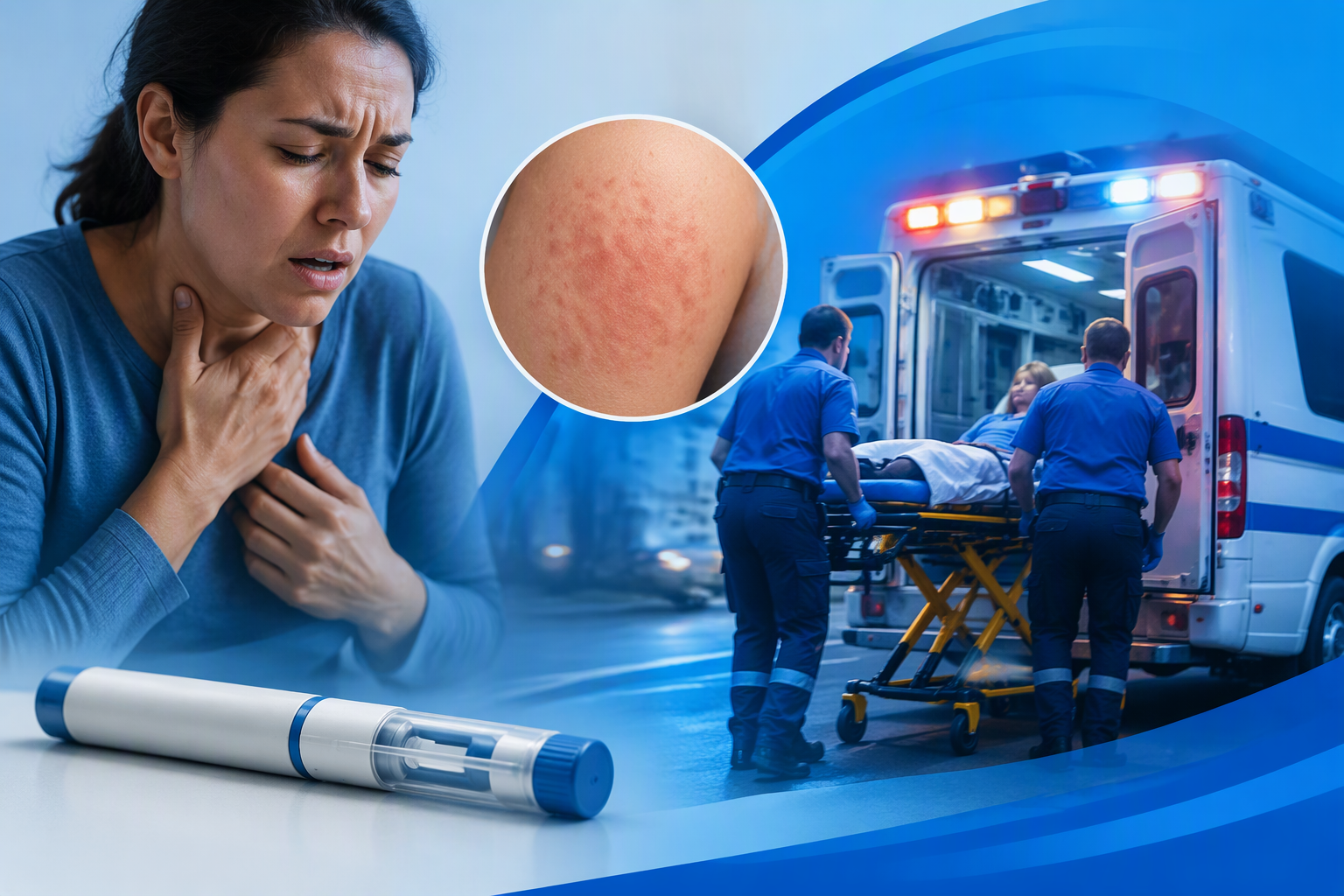
Call 911 if a reaction includes:
- Trouble breathing or swallowing
- Throat tightness
- Swelling of the face, lips, tongue, or throat
- Faintness or collapse
- A very fast heartbeat with other reaction symptoms
A rash does not always appear before a severe reaction. Anaphylaxis or angioedema can involve the airway, facial swelling, or circulation symptoms.
Do not drive if breathing is difficult or faintness is present. A portal message, email, or telehealth chat is not emergency care.
Do not wait for an antihistamine to work
An antihistamine may reduce itching or hives, but improvement does not prove that the reaction is mild. It also does not replace emergency treatment for facial swelling, throat symptoms, breathing trouble, or faintness.
We recommend calling 911 immediately when emergency symptoms are present rather than waiting to see whether another medicine helps.
What to do while help is coming
Follow the emergency operator’s instructions. Stop eating or drinking if swallowing is difficult.
Use prescribed emergency medicine, such as epinephrine, according to the patient’s emergency plan. Do not take another tirzepatide dose.
Is it a mild injection-site reaction or a wider GLP-1 skin rash reaction?
Redness, itching, discomfort, or swelling near the needle site can occur without anaphylaxis. A rash that spreads beyond that area needs more urgent review.
| Trait | Small local patch | Spreading or whole-body reaction |
|---|---|---|
| Location | Stays near the injection site | Appears beyond the injection site |
| Spread | Remains contained | Grows, returns, or spreads elsewhere |
| Other symptoms | No facial swelling, breathing trouble, faintness, or whole-body symptoms | May include hives, distant swelling, throat symptoms, or faintness |
| Action | Record and monitor with clinical guidance | Seek prompt care; call 911 for emergency signs |
A photo or measurement cannot establish that a reaction is safe. Seek clinical advice if a tirzepatide rash spreads, worsens, returns, or occurs with symptoms elsewhere.
Signs that fit a local injection-site reaction
A local reaction usually remains close to the needle site while breathing, swallowing, and circulation remain normal.
Record when the patch appeared and whether it changes. A photo may help the care team compare its size and appearance over time. Contact the prescriber if the area grows, becomes more painful, or does not settle.
Signs that need prompt medical review
Seek prompt medical advice when:
- Hives or a rash extend beyond the injection site
- Swelling develops elsewhere
- The area becomes hotter, harder, more painful, or more swollen
- Fever, pus, drainage, red streaks, or rapidly spreading redness develops
These signs can have several causes, including a wider reaction or infection. A clinician should assess them.
When can a tirzepatide allergic reaction start?

A reaction may begin soon after an injection or appear later. Timing alone cannot confirm or exclude a drug allergy.
Record when the injection was given and when each symptom began. Note whether symptoms spread, improved, or returned.
Can an allergy start after several normal doses?
Yes. Previous tolerance does not guarantee that a later dose will not cause a reaction.
New facial swelling, widespread hives, or other concerning symptoms still require assessment even if earlier injections caused no problems. Do not assume another dose is safe based on past experience.
Why the timing record matters
A clear timeline helps the prescriber consider tirzepatide alongside foods, illnesses, other medicines, supplements, and skin products.
Include any recent dose or schedule changes. Our maximum tirzepatide dose guide explains why dosing decisions should be made with the prescriber.
What should you do if you suspect tirzepatide caused the reaction?
We recommend these steps:
- Check for emergency signs. Look for breathing or swallowing trouble, throat tightness, facial swelling, faintness, or a very fast heartbeat.
- Record what is happening. Note the timing, location, spread, and other symptoms.
- Seek appropriate care. Call 911 for emergency symptoms and seek prompt clinical care for spreading or worsening reactions.
- Request a prescription review. Speak with the prescriber before taking another dose.
A description or image alone may not identify the cause. Symptoms that worsen need a higher level of care, even if they initially seemed mild.
Do not test the reaction with another dose
Do not take the next dose until the prescriber has reviewed a suspected allergy. Do not lower the dose, change the schedule, or restart treatment without clinical guidance.
This applies at every strength. Our tirzepatide 15 mg refill and side-effect guide provides additional dosing context, but individual instructions must come from the prescriber.
What to record for the prescriber
Gather:
- The dose, product name, and injection time
- The start time of each symptom
- The rash location, spread, pain, itching, warmth, and swelling
- Clear, time-stamped photos when safe
- Other medicines, supplements, and foods
- Adhesives, wipes, soaps, lotions, or skin products used that day
When should you contact the tirzepatide prescriber?
Contact the care team promptly for spreading hives, a rash beyond the injection site, growing swelling, or symptoms that return after improving. If an allergy may be involved, request a review before the next dose.
Mounjaro and Zepbound both contain tirzepatide, so a serious reaction involving the active drug is relevant to either product.
Use emergency care for airway or circulation symptoms
Call 911 for trouble breathing or swallowing, throat tightness, facial or tongue swelling, faintness, or a very fast heartbeat with other reaction symptoms. Do not wait for the prescriber to respond.
Use urgent clinical help for spreading or worsening symptoms
Seek prompt guidance if hives spread or swelling grows without current airway symptoms. Call 911 immediately if breathing trouble, throat tightness, facial swelling, or faintness begins.
How telehealth patients can get help after hours
The response should match the symptoms, not the clinic’s opening hours. We recommend saving the prescribing service’s support details and after-hours instructions before they are needed.
A portal message may be suitable for a non-emergency prescription review. Include a callback number, current location, dose, symptom timeline, and next scheduled dose.
For emergency symptoms
Call 911 or the appropriate local emergency number. Do not wait for a chat, email, or portal response.
For urgent but non-emergency symptoms
Use the platform’s after-hours clinical service when available. If it cannot respond promptly, seek local urgent care or another appropriate clinician based on the symptoms.
Do not take another dose while waiting for review of a suspected allergy.
For a prescription review
Send the dose, timeline, photos, other medicines, and next dose date. Ask directly whether the next dose should be held pending review.
At usetemi.com, we support online prescription reviews. Emergency symptoms still require 911 rather than a platform message.
Other causes of redness or rash after a tirzepatide shot
A rash after an injection does not prove a drug allergy. Possible causes include adhesives, alcohol wipes, bandages, soap, lotion, another medicine, food, illness, insect bites, or heat.
Clinical review remains important when symptoms spread, worsen, or involve more than the skin.
Contact irritation
Contact irritation may follow the shape of an adhesive or the area where a product touched the skin. Record everything applied to or near the injection site.
Do not retry a suspected product on irritated or damaged skin. Painful, persistent, or spreading symptoms still need clinical review.
Possible infection
Increasing warmth, pain, swelling, drainage, red streaks, or fever requires prompt assessment. An injection-site infection can resemble irritation or an allergic reaction.
Do not assume that every hot or painful patch is an allergy.
Another medicine or illness
List new prescriptions, nonprescription medicines, supplements, foods, and recent illnesses. The care team may need the full timeline to identify the likely cause.
How to reduce injection-site irritation
Basic injection practices may reduce local irritation, but they cannot prevent a true drug allergy or make another dose safe after a suspected allergic reaction.
Follow the product instructions and the prescriber’s training. Use a clean site, and avoid rubbing or scratching the area afterward.
Choose and rotate the site
Use only injection areas allowed by the product instructions. Choose a different spot within an approved area for each dose.
If local reactions recur, keep a simple log with the date, dose, location, and skin response.
Check the skin before the dose
Check for bruises, sores, hard tissue, rash, warmth, scars, scaling, infection, or broken skin. Select another approved site if the planned area is damaged.
Contact the prescriber if repeated reactions make it difficult to find a suitable site. Better technique does not make it safe to test a suspected allergy.
FAQ
Can tirzepatide cause hives or facial swelling?
Tirzepatide product safety information warns about serious hypersensitivity reactions. Hives may spread beyond the injection area, while swelling can affect the face, lips, tongue, or throat. Call 911 if swelling or a rash occurs with trouble breathing or swallowing, throat tightness, faintness, or other emergency symptoms.
Can I react even if earlier doses caused no problem?
Yes. Previous tolerance does not rule out a later tirzepatide allergic reaction. Record the symptoms and their timing, then contact the prescriber before another dose. Call 911 if emergency signs develop.
Should I take my next dose after a rash?
Do not take another dose to test a suspected allergy. The prescriber may need to review the timing, photos, other exposures, and possible causes before treatment continues.
Does improvement after an antihistamine mean I can stay home?
Not necessarily. Reduced itching or fewer hives does not rule out a serious reaction. Call 911 for breathing or swallowing trouble, throat tightness, facial swelling, faintness, or a very fast heartbeat with other reaction symptoms.
Who should avoid tirzepatide because of an allergy history?
People with a previous serious hypersensitivity reaction to tirzepatide or one of the product’s ingredients should discuss that history with the prescriber. Share the product name, reaction details, treatment received, and approximate date. Do not restart tirzepatide or switch between tirzepatide products without clinical review.
Get a prescription review before your next dose
If a rash or suspected allergy occurred, hold the next dose until the prescriber provides clear instructions. Gather the dose details, timeline, photos, medication list, and next injection date, then request a prescription review through usetemi.com or your current care team.