


TL;DR
GLP-1 bloating may happen because these medicines slow how quickly food leaves the stomach. This can cause early fullness, pressure, belching, gas, nausea, or abdominal swelling. For mild symptoms, we recommend smaller low-fat meals, slow eating, still water, and checking for constipation. Seek prompt medical care for severe pain, repeated vomiting, marked swelling, dehydration, or an inability to pass stool or gas.
GLP-1 bloating: what causes the full, tight feeling?
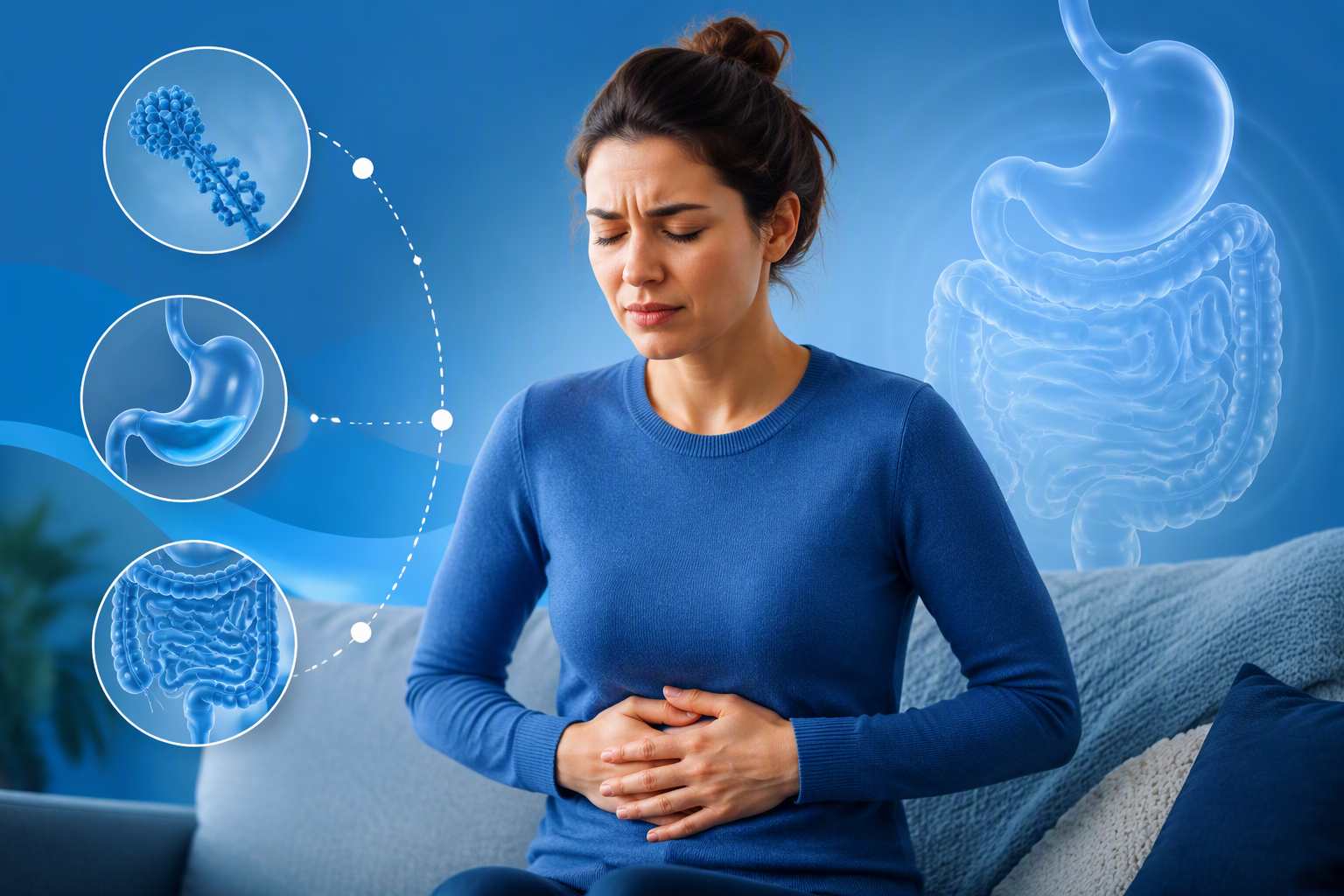
GLP-1 medicines can delay gastric emptying, meaning food moves out of the stomach more slowly. A meal that once felt comfortable may then cause early fullness, pressure, belching, nausea, or bloating.
Meal size is only part of the picture. High-fat foods, fast eating, constipation, carbonated drinks, and sudden increases in fiber may add pressure or gas.
Bloating does not prove that treatment is working. Severe, persistent, or worsening symptoms need clinical review because the medicine may not be the only possible cause.
How slower digestion can cause pressure and belching
When food remains in the stomach longer, upper abdominal fullness and belching may become more noticeable, particularly after a large or fatty meal.
Lower intestinal gas can feel different, causing cramps, pressure, or increased flatulence. Some patients experience both patterns. Describing where the discomfort occurs can help the prescribing team assess it.
Why symptoms may start after a dose increase
Digestive symptoms may become more noticeable when treatment begins or the dose increases. A large meal, high-fat food, constipation, or abrupt fiber change can also trigger a flare.
We recommend comparing the symptom start with the injection date and dose. Our week-by-week tirzepatide titration guide explains why dose timing matters. Patients should not reduce, delay, or stop a dose without instructions from their prescriber.
Is gas a tirzepatide side effect?
Gas and bloating can occur during tirzepatide treatment, sometimes alongside nausea, diarrhea, constipation, reflux, vomiting, or abdominal pain.
These symptoms are not interchangeable. Gas does not explain every case of pain or swelling, and side-effect patterns can vary between patients. Current prescribing information and a clinician’s assessment should guide treatment decisions.
Patients using a maintenance dose can review our tirzepatide 15 mg dose and side-effect guide, then discuss recurring symptoms with their prescriber.
Gas, bloating, and fullness are not the same symptom
Gas may cause belching, flatulence, or lower abdominal pressure. Bloating describes a feeling of tightness or swelling, with or without visible enlargement.
Fullness soon after eating may reflect slower stomach emptying or a portion that now exceeds the stomach’s comfortable volume. Explaining the difference gives the clinician more useful information.
What to note after a tirzepatide dose change
Record the injection date, dose, and when the symptoms began. Also note:
- Meal size and fat content
- Bowel movements and stool pattern
- Pain location and severity
- Vomiting or visible swelling
- Fluid intake and urination
We suggest sharing this pattern before the next planned dose increase. A record across several days is usually more informative than a general description of feeling unwell.
How to get rid of bloating on GLP-1 treatment
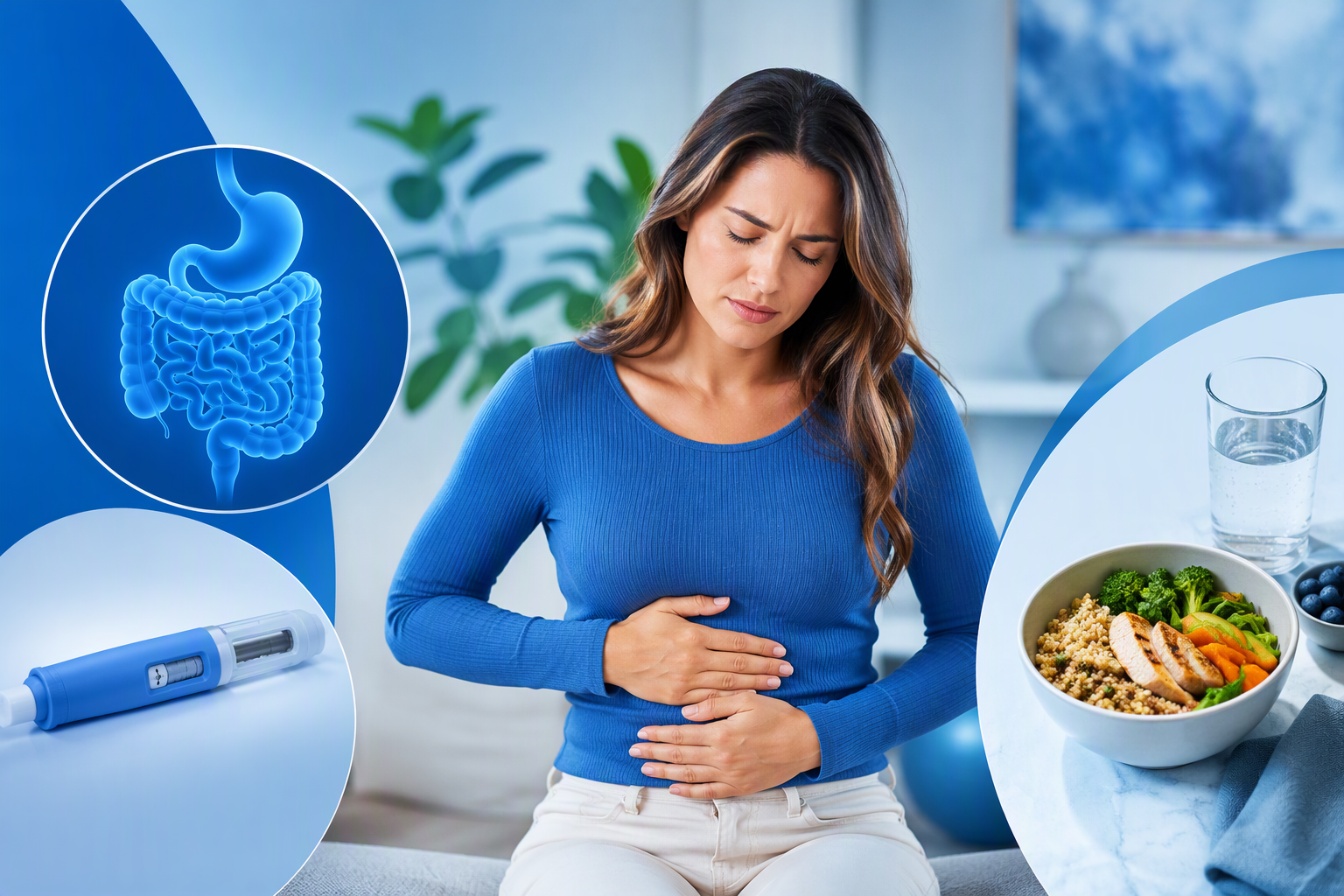
For mild GLP-1 bloating, we recommend starting with five practical steps:
- Reduce meal size.
- Eat slowly.
- Limit high-fat foods.
- Avoid carbonated drinks.
- Check for constipation.
Small sips of still fluid may be more comfortable than a large drink with a meal. Stop eating at the first clear sign of fullness rather than trying to finish a set portion.
Ask a pharmacist or prescriber before taking an over-the-counter gas remedy. Self-treatment should not delay assessment when bloating comes with significant pain, vomiting, marked swelling, or worsening symptoms.
What to do at your next meal
Try one lean protein, an easy-to-digest starch, and a small portion of cooked produce. Examples include baked chicken, white rice, and cooked carrots, or an egg with toast and banana.
Eat at a relaxed pace and choose still water. During a flare, it may help to pause fried foods, creamy sauces, fizzy drinks, large smoothies, and large raw salads. Our GLP-1 diet plan for regular and low-appetite days includes more small-meal ideas.
What to pause while pressure is active
Foods and drinks that may add volume or gas include:
- Carbonated drinks
- Sugar alcohols
- Large meals
- Fried or high-fat foods
- Large servings of beans or bran
- Raw cruciferous vegetables
- Fiber supplements that increase pressure
Once symptoms settle, reintroduce foods individually. This makes it easier to identify a possible trigger without unnecessarily restricting the diet.
Can fiber help, or will it make bloating worse?
More fiber is not always the best first step during an active flare. A sudden increase may add gas, bulk, and pressure while digestion is already slow.
We recommend basing fiber changes on the patient’s stool pattern, fluid intake, and clinical advice. Constipation may require a different approach from upper abdominal fullness in someone who is passing stool normally.
An inability to pass stool or gas alongside pain or marked swelling needs prompt medical assessment. Do not try to manage that pattern with a large dose of fiber at home.
When gradual fiber may help
A gradual increase may help when constipation is mild and stool and gas are still passing. Make small changes rather than adding a large supplement all at once.
Fiber also needs adequate fluid unless a clinician has advised fluid restriction. Monitor whether bowel movements improve without increasing pressure or pain.
When added fiber may backfire
Fiber supplements may worsen discomfort when gastrointestinal movement is slow. Stop and seek advice if pressure increases or symptoms include vomiting, marked swelling, or an inability to pass stool or gas.
The prescribing team can review hydration, diet, other medicines, and whether constipation needs its own treatment plan.
What if bloating comes with diarrhea or stomach pain?
Bloating with diarrhea calls for a different response from bloating with constipation. The same food or fiber advice will not suit both patterns.
Pain location can provide useful context, but it cannot confirm the cause. Severe or persistent pain should not be dismissed as routine gas.
Bloating with diarrhea
Take small sips of water or an oral rehydration drink when appropriate, and choose simple meals in small portions. Pause alcohol, greasy foods, and large servings until stools improve.
Contact a clinician if diarrhea persists or is accompanied by reduced urination, dizziness, faintness, or difficulty keeping fluids down. These symptoms may indicate dehydration.
Upper or lower abdominal pain
Upper abdominal pain may occur with fullness or reflux. Lower pain may occur with gas, constipation, or diarrhea, but location alone is not enough to identify the cause.
Seek prompt assessment for severe or persistent pain, pain extending to the back, fever, repeated vomiting, or marked swelling. A gas remedy should not be used to delay care.
How long does GLP-1 bloating last?
There is no fixed timeline. Mild bloating may improve as the body adjusts, but the course depends on the medicine, dose, meals, bowel pattern, and other health conditions.
We judge persistence by its effect rather than a specific number of days. Contact the prescriber when symptoms interfere with eating, drinking, sleep, work, or bowel movements.
Signs the symptom pattern is improving
Signs of improvement may include:
- Less pressure after meals
- Normal fluid intake
- A return to the usual bowel pattern
- Less belching, nausea, pain, or swelling
- Tolerance of a wider range of foods
A short improvement followed by worsening symptoms still deserves review.
When the titration plan needs review
Ask the prescribing team to review the plan if symptoms return after each dose or worsen after each increase. The same applies when food and fluid intake become difficult.
Persistent constipation, diarrhea, pain, or vomiting may require separate management. Patients should not push through an increase or change their schedule without medical instructions.
When to call a clinician about GLP-1 bloating
We recommend using symptom severity and its effect on daily function to choose the next step.
| Level | When it fits | What to do |
|---|---|---|
| Home care | Mild pressure, normal fluid intake, no severe pain, and continued passage of stool and gas | Try smaller low-fat meals, still fluids, and slower eating. Monitor the pattern. |
| Prescriber review | Symptoms persist, follow each dose, or disrupt eating, drinking, sleep, or bowel movements | Contact the prescribing team before another dose change. |
| Prompt medical assessment | Severe or persistent pain, repeated vomiting, marked swelling, inability to keep fluids down, or inability to pass stool or gas | Seek prompt medical care. |
Very low urine output, faintness, confusion, or a rapid heartbeat may be signs of serious dehydration. These symptoms need prompt assessment.
Symptoms alone cannot confirm conditions such as bowel obstruction, pancreatitis, gallbladder disease, or gastroparesis. A clinician must determine the cause.
Contact the prescriber before the next dose change
Contact the prescriber when symptoms follow titration or keep returning. We suggest asking for a review of:
- Dose timing and the titration plan
- Fluid and food intake
- Constipation or diarrhea
- Other medicines
- Meal size and possible food triggers
- Other potential causes
Do not adjust or stop the prescription without instructions.
Seek prompt medical assessment
Seek prompt care for severe or persistent abdominal pain, repeated vomiting, or an inability to keep fluids down.
Marked abdominal swelling or an inability to pass stool or gas is not routine bloating and also needs prompt assessment.
Use a 7-day symptom log before your medication review
A short symptom log gives the prescriber concrete information about timing and possible triggers. At Temi, we use these details to make follow-up discussions more focused.
Copy this template into a phone note:
Date:
Injection date and dose:
Symptom start time:
Meal size and foods:
High-fat food:
Eating time:
Carbonation or sugar alcohols:
Fluid intake:
Bowel movement and stool pattern:
Gas or belching:
Pain location and severity:
Visible swelling:
Vomiting:
Urination:
Temi provides prescription follow-up and clinician review for eligible patients.
What to record each day
Track the injection time, dose, symptom onset, meal size, eating pace, carbonation, and sugar alcohol intake.
Include bowel movements, gas, pain, vomiting, fluid intake, urination, and visible swelling. Specific times and descriptions are more helpful than terms such as “bad” or “a lot.”
Questions to ask the prescriber
Consider asking:
- Could the dose timing or titration plan be contributing?
- Does constipation or diarrhea need separate treatment?
- Which food and fiber changes fit this bowel pattern?
- Could another medicine be contributing?
- Which symptoms should trigger urgent care?
FAQ
How do I get rid of bloating on GLP-1?
For mild symptoms, start with smaller low-fat meals, slower eating, still drinks, and a check for constipation. Stop eating when fullness begins. Contact the prescriber if symptoms persist, worsen, or follow each dose.
How long does bloating last on GLP-1?
There is no fixed timeline. Mild symptoms may ease as the body adjusts, but duration varies by medicine, dose, meals, and bowel pattern. Symptoms that interfere with daily activities or fluid intake need review.
Why am I so bloated on semaglutide?
Semaglutide can slow how quickly food leaves the stomach, contributing to fullness, pressure, belching, or nausea. Large meals, fatty foods, carbonation, fast eating, and constipation may make symptoms worse.
Why do I feel bloated on tirzepatide?
Tirzepatide can affect stomach emptying and appetite, so a previously comfortable portion may feel too large. Record the timing of injections, meals, bowel movements, pain, and vomiting, then share the pattern with the prescriber.
When is GLP-1 bloating an emergency?
Seek prompt care for severe or persistent abdominal pain, repeated vomiting, marked swelling, inability to keep fluids down, or inability to pass stool or gas. Faintness, confusion, or very low urine output also needs urgent assessment.
Review persistent GLP-1 bloating with a clinician
Do not change a GLP-1 dose without medical guidance. If bloating persists, follows each injection, or limits food and fluid intake, visit Temi to check eligibility for prescription follow-up and clinician review.