TL;DR
Research into semaglutide alcohol cravings suggests the medication may reduce alcohol interest, drinking quantity, or heavy drinking days for some people. These early findings support further study, but semaglutide is not FDA-approved for alcohol use disorder. We recommend discussing any change in drinking with a clinician, especially before stopping alcohol abruptly after frequent or heavy use.
Semaglutide and alcohol cravings: what the evidence says

Semaglutide may affect alcohol cravings, but the research and the drug label tell different stories.
Some patients report losing interest in alcohol after starting semaglutide. A randomized, placebo-controlled trial led by a USC investigator also found reductions in alcohol craving, drinking quantity, and the frequency of heavy drinking days among adults with symptoms of alcohol use disorder.
Those results are promising, not conclusive. They do not show that semaglutide reliably stops drinking or treats alcohol use disorder.
Ozempic and Wegovy both contain semaglutide, although they have different approved uses. Neither is FDA-approved for alcohol use disorder. We do not recommend starting, stopping, or changing semaglutide to manage alcohol cravings without a prescriber.
Is a sudden loss of interest in alcohol a real effect?
It could be related to treatment, but one experience cannot establish the cause.
We suggest recording when the change began, any dose adjustments, side effects, food intake, and usual number of drinks. Someone might want less wine while also eating less because of nausea or early fullness. That makes it difficult to separate a direct change in craving from other treatment effects.
What semaglutide does not prove or guarantee
Semaglutide does not:
- Guarantee abstinence
- Prevent alcohol withdrawal
- Confirm that alcohol use disorder is in remission
- Replace an alcohol assessment or established treatment
- Make abrupt alcohol cessation safe for someone with physical dependence
What GLP-1 alcohol use reduction studies have measured
Research on GLP-1 medications and alcohol includes patient reports, surveys, medical records, laboratory studies, and randomized trials. These designs provide different levels of evidence.
Reports can reveal patterns worth investigating. Observational studies can identify associations but cannot confirm that a medication caused them. Randomized trials offer stronger evidence because they compare treatment with a control, although their size, duration, dose, and participant selection still affect the conclusions.
The USC-led randomized trial found that semaglutide reduced several alcohol-related measures compared with placebo. We view that as a reason for continued research, not a basis for routine prescribing for alcohol use disorder.
Cravings, drinks, and heavy drinking days are not the same outcome
Researchers may measure:
- Craving scores: The reported strength or frequency of urges
- Drinks per week: Total intake across a week
- Drinks per drinking day: How much a person consumes when drinking
- Heavy drinking days: Days that exceed a study’s defined threshold
- Abstinence: No alcohol use during a set period
A person may report weaker cravings while still having heavy drinking days. Improvement in one measure does not guarantee improvement in another.
Why observational studies cannot establish cause
People using GLP-1 drugs may also change their meals, social routines, exercise habits, or weight-management goals. Nausea and early fullness can affect when and how much they drink.
Surveys and medical records may also miss serving sizes, unreported alcohol use, or the actual reason for a change. An association alone does not prove treatment benefit.
What early randomized trials add
Random assignment helps reduce bias. A placebo group can also help researchers distinguish a drug effect from expectations or unrelated behavior changes.
Early trials still cannot answer every clinical question. Longer follow-up and broader patient groups are needed to clarify lasting benefits, safety, dosing, and what happens when treatment ends.
Why semaglutide might change alcohol interest
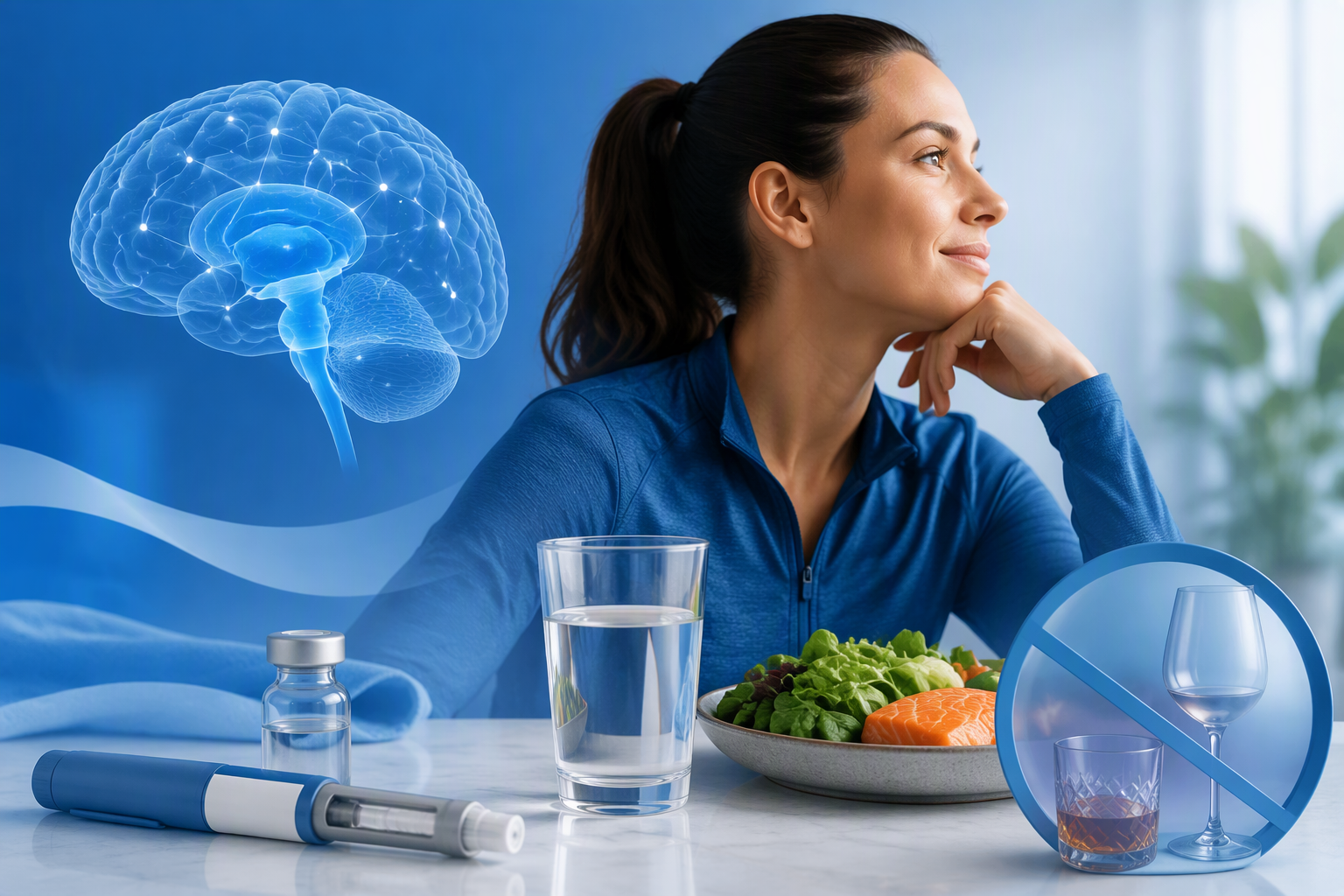
Semaglutide acts on GLP-1 signaling involved in appetite and fullness. Researchers are investigating whether this signaling also affects brain pathways associated with reward.
That explanation remains under study. A plausible mechanism does not establish semaglutide as an effective alcohol treatment.
Reward pathways under study
Animal research and early human findings have encouraged further study of reward-related effects. One possibility is that semaglutide changes how rewarding alcohol feels for some people.
Researchers have not established one mechanism that explains every reported change. The relevant dose, duration, and clinical importance also remain uncertain.
Other reasons drinking may fall
Alcohol use can change because of:
- Nausea or stomach discomfort
- Reduced food intake or earlier fullness
- Weight-management goals
- Changes in social plans
- Cost
- Expectations about the medication
Any of these factors could reduce drinking without directly changing alcohol-related reward.
Is any GLP-1 approved to treat alcohol use disorder?
No GLP-1 medication is FDA-approved for alcohol use disorder.
Off-label prescribing means using an approved drug for a purpose outside its approved labeling. A clinician may consider off-label treatment in some circumstances, but promising research does not establish the right patient, dose, duration, or monitoring plan.
We recommend choosing a GLP-1 medication according to the condition being treated, medical history, side effects, access, and prescriber guidance—not social-media reports about alcohol.
Reduced drinking is not the same as treating alcohol use disorder
Alcohol use disorder involves more than craving. A clinical assessment may consider loss of control, harmful consequences, tolerance, withdrawal, and unsuccessful attempts to stop.
Someone can drink less and still need treatment. Lower interest in alcohol also does not rule out physical dependence.
Which GLP-1 is best for alcohol cravings?
There is no evidence-based winner. Current findings do not support ranking semaglutide, tirzepatide, liraglutide, or another GLP-1 medication for alcohol craving reduction.
Cost and access may still affect treatment chosen for an approved or clinician-determined purpose. Our cash-pay semaglutide guide explains common considerations for uninsured patients.
Can you drink alcohol while taking semaglutide?
There is no single answer for every patient. The risks depend on drinking patterns, food intake, treatment dose, symptoms, medical history, diabetes medicines, and other drugs.
Alcohol may worsen nausea, vomiting, stomach discomfort, or dehydration. Eating less can also make alcohol’s effects harder to predict. We recommend asking the prescriber for guidance based on the full clinical picture.
Nausea, vomiting, and dehydration
Semaglutide and alcohol can each contribute to stomach symptoms. Vomiting and difficulty keeping fluids down can lead to dehydration.
Contact a clinician if symptoms persist or interfere with eating and drinking. Severe abdominal pain, fainting, confusion, or an inability to retain fluids warrants prompt medical attention.
Low blood sugar risk
The risk of low blood sugar depends partly on other diabetes treatments, meal intake, vomiting, and alcohol use. Insulin and sulfonylureas are particularly relevant to a medication review.
Possible warning signs include shaking, sweating, weakness, confusion, and loss of consciousness. Urgent symptoms require immediate care.
Questions about the liver, pancreas, and other medicines
Tell the prescriber about liver disease, previous pancreatitis, gallbladder problems, diabetes treatments, and all drugs or supplements being taken.
There is no universal alcohol-and-semaglutide risk profile. Individual health conditions and drinking habits matter.
Lower cravings do not make sudden alcohol withdrawal safe
A person who drinks heavily or frequently may have physical dependence even after cravings decline. Semaglutide should not be used as a home detox method.
We recommend same-day clinical guidance before abrupt cessation when dependence may be present. Withdrawal symptoms can become serious after drinking stops.
Signs that need urgent medical care
Call emergency services for symptoms such as:
- Seizures
- Hallucinations
- Severe confusion
- Extreme agitation
- Fever
- A very fast or irregular heartbeat
Low craving does not predict mild withdrawal.
When to contact a clinician before stopping
Seek guidance before stopping if there is frequent heavy use, morning drinking, previous withdrawal, past seizures, repeated unsuccessful attempts to stop, or a need to drink to feel normal.
A clinician can assess whether outpatient support or supervised withdrawal care is appropriate.
What can reduce the urge to drink alcohol now?
No treatment eliminates alcohol cravings for everyone. Established treatment can include medication, counseling, mutual-support groups, and structured substance-use care.
Semaglutide should not replace an alcohol assessment or treatment with stronger supporting evidence.
FDA-approved medicines for alcohol use disorder
FDA-approved options include naltrexone, acamprosate, and disulfiram. Each has different precautions and treatment goals.
A clinician should review alcohol use, withdrawal risk, opioid use, liver and kidney health, other medicines, and the person’s goal of reducing or stopping drinking before recommending an option.
Care options for cash-pay or uninsured patients
Community health centers, state-funded programs, sliding-scale clinics, and local substance-use services may offer lower-cost care. SAMHSA’s National Helpline at 1-800-662-HELP (4357) provides free, confidential treatment information and referrals around the clock.
Temi is an online prescription and GLP-1 platform. Our visits can help identify medication risks and support an appropriate referral, but we do not provide alcohol detox or addiction treatment.
What to ask your semaglutide prescriber about alcohol
At a refill or follow-up visit, we recommend reviewing:
- Usual drinks per day and week
- Heavy drinking days
- Previous withdrawal symptoms
- Nausea, vomiting, hydration, and food intake
- Insulin, sulfonylureas, opioids, and other medicines
- Liver and kidney conditions
- Symptoms that require urgent care
Do not raise, lower, skip, or stop a GLP-1 dose to influence alcohol cravings without clinical instructions. If stopping treatment is being considered for another reason, review what may happen after stopping Ozempic with the prescriber.
Bring numbers, not labels
Record drink types, serving sizes, drinking days, meal timing, side effects, and glucose readings when relevant.
Labels such as “social drinker” provide little clinical detail. Clear records help the prescriber assess medication safety and alcohol-related risk separately.
Set separate treatment goals
Keep the GLP-1 treatment goal distinct from the alcohol goal. Dose changes should follow the medication’s prescribed purpose and side-effect plan.
Ask whether the drinking pattern warrants its own assessment, medication, counseling, or withdrawal plan.
Semaglutide and alcohol cravings: common questions
Does Ozempic make people not want to drink alcohol?
Some people report less interest in alcohol, and early research suggests semaglutide may reduce certain craving and drinking measures. The effect is not universal, and an individual experience cannot prove Ozempic caused the change.
Which GLP-1 is best for alcohol cravings?
None can currently be named the best. No GLP-1 is FDA-approved for alcohol use disorder, and the available evidence does not support ranking these medications for craving reduction.
Can semaglutide stop alcohol cravings completely?
Semaglutide may reduce cravings for some people, but it does not guarantee that cravings or alcohol use will stop.
Should someone stop drinking if semaglutide lowers cravings?
People who may be physically dependent should obtain medical guidance before stopping abruptly. A drop in cravings does not remove withdrawal risk.
Will cravings return after semaglutide ends?
Current evidence cannot reliably predict what will happen for an individual. Semaglutide should not be continued, restarted, or adjusted solely to control alcohol use. Our guide to managing prescriptions in one place can help patients prepare an accurate medication list for review.
FAQ
How does semaglutide affect alcohol use?
Semaglutide may reduce interest in alcohol for some patients. It can also cause nausea, early fullness, or reduced food intake, which may indirectly change drinking behavior.
Is alcohol forbidden while taking Wegovy?
There is no universal prohibition for every Wegovy patient. A prescriber may recommend avoiding alcohol based on side effects, food intake, diabetes treatment, medical history, or drinking pattern.
What treatments can reduce the urge to drink?
Options include FDA-approved medications for alcohol use disorder, counseling, mutual-support programs, and structured treatment. The appropriate choice depends on treatment goals, health history, other medicines, and withdrawal risk.
Can lower cravings mean alcohol dependence is gone?
No. Craving is only one part of alcohol use disorder. Someone may feel less interested in alcohol while still experiencing impaired control, tolerance, harmful consequences, or physical dependence.
Review alcohol use with your prescriber
Use your next Temi refill or follow-up visit to review your medication list, drink counts, side effects, and withdrawal history. Ask the prescriber to assess GLP-1 safety and alcohol-related risk before changing either plan.