TL;DR
Approved Ozempic injection sites include the abdomen, thigh, and upper arm. No site is best for everyone. We recommend choosing healthy fatty tissue, using a different point for each weekly dose, and following the Instructions for Use supplied with the prescribed pen.
Where are the approved Ozempic injection sites?
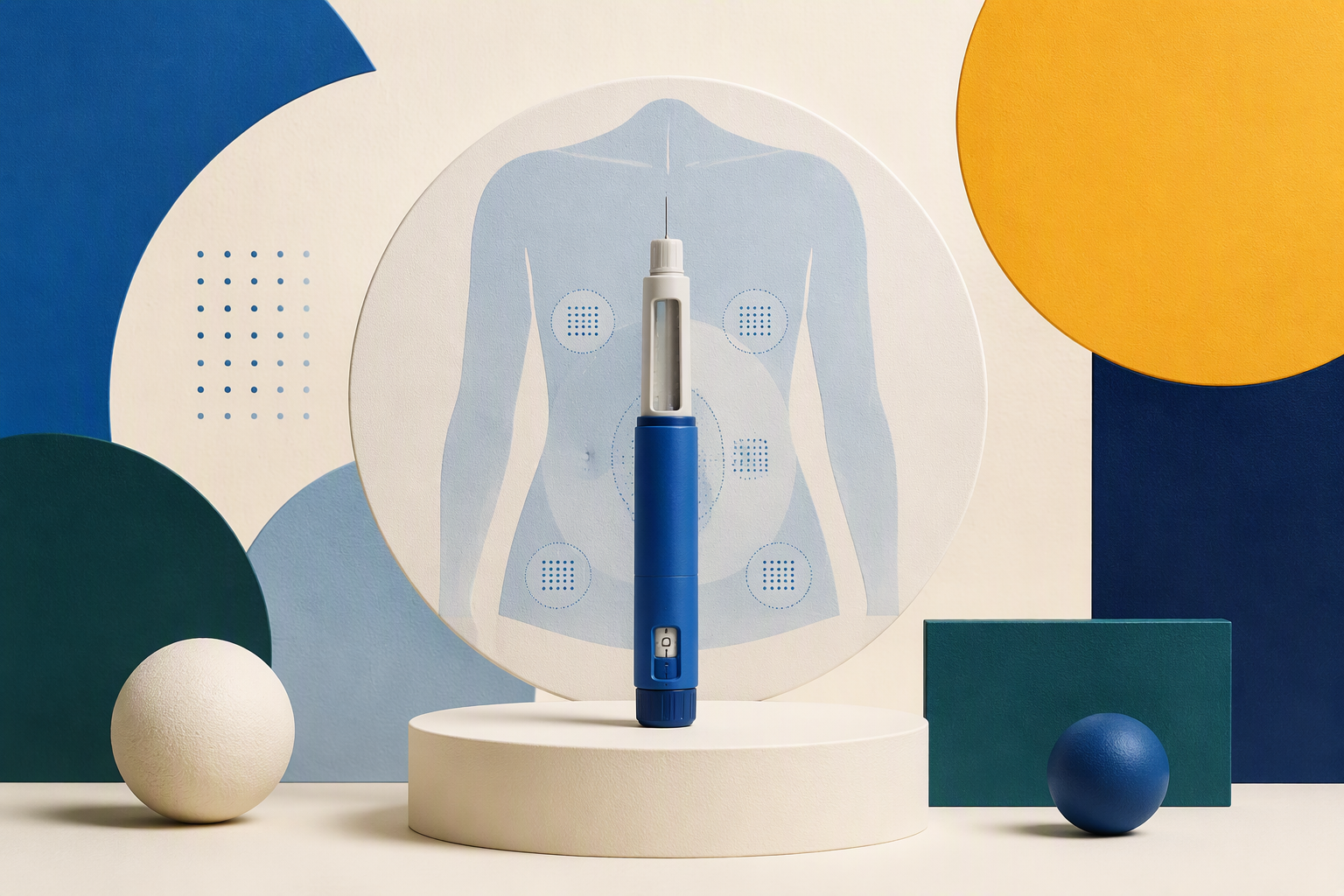
Ozempic is injected under the skin of the abdomen, thigh, or upper arm. These areas generally provide enough fatty tissue for a subcutaneous injection. There is no single correct point within each area.
Never inject Ozempic into a muscle or vein. Avoid skin that is bruised, hard, red, swollen, scarred, tender, or otherwise damaged.
The upper arm can be difficult to see and reach. If help is needed, a caregiver should follow the technique demonstrated by a clinician or described in the pen instructions.
Ozempic and Wegovy both contain semaglutide, but they have different approved uses and dosing instructions. We do not recommend treating them as interchangeable.
Abdomen
Choose healthy skin with enough fatty tissue, staying at least two inches from the belly button. Avoid scars, bruises, hard patches, waistbands, and areas rubbed by tight clothing.
A visible point that can be reached without twisting usually makes it easier to hold the pen steady.
Front of thigh
Use the fatty front or outer-front part of the upper thigh rather than the inner thigh, knee, or firm muscle. Sitting down can keep the leg still and make the area easier to see.
Skip any point that remains sore or irritated from an earlier injection.
Upper arm
Use the fatty outer or back portion of the upper arm, not the shoulder muscle. If reaching this area puts the pen at an awkward angle, ask a trained caregiver for help or choose another approved site.
Is the stomach, thigh, or upper arm better for Ozempic?
No approved site is best for every patient. We recommend choosing an area that is easy to see, reach, and rotate while keeping control of the pen.
Each option has practical benefits:
- Abdomen: Easy to see and provides a broad rotation area.
- Thigh: Often easy to reach while seated.
- Upper arm: Provides another rotation area but may require help.
- Clothing pressure: Tight sleeves and waistbands can irritate a fresh site.
- Personal comfort: Skin sensitivity and tissue thickness vary.
A less painful injection does not necessarily mean better absorption or stronger results. Likewise, pain does not prove the medicine is working, and a painless injection does not mean it failed.
Stomach versus thigh
The abdomen provides a large, visible area for rotation. The thigh may feel more manageable for someone who prefers to sit and brace their hand during the injection.
Comfort can change between doses. A small surface blood vessel, a tender patch of skin, or movement of the pen may affect how an injection feels.
When the upper arm may help
Using the upper arm can give the abdomen and thighs time to recover when those areas are irritated. However, it is not a good choice if the correct fatty area cannot be seen or reached safely.
How to inject Ozempic step by step

Always use the prescribed pen and dose. Pen strengths and controls can differ, so check the current Instructions for Use supplied with the medication.
- Wash and dry your hands.
- Check the pen label, expiration date, and medicine.
- Attach a new needle.
- Complete a flow check when the pen instructions require it.
- Select clean, healthy skin in an approved area.
- Set the prescribed dose.
- Insert the needle as instructed.
- Press and hold the dose button until the counter shows 0.
- Keep the needle in the skin while slowly counting to six.
- Pull the needle straight out.
- Remove the needle and place it in a sharps container.
Do not change or repeat a dose without clinical advice. Our GLP-1 overdose response guide covers warning signs and what to do after a suspected dosing error.
Before the injection
Ozempic should appear clear and colorless. Do not use a pen that is expired, damaged, mislabeled, or contains medicine that looks cloudy or colored.
Use a new needle for every dose. If instructed to clean the skin, allow it to dry before inserting the needle.
During the injection
Set only the prescribed dose. Insert the needle using the method shown by the prescriber or pen guide.
Hold the button until the counter reaches 0, then keep the needle in place while counting slowly to six. Removing it too soon may prevent the full dose from entering the skin.
After the injection
Pull the needle straight out. If a small blood spot appears, press clean gauze gently against it. Do not rub or massage the area.
Remove and discard the needle safely. Never share an Ozempic pen, even if the needle has been changed.
Do you need to pinch the skin for an Ozempic injection?
Pinching is not required for everyone. The appropriate technique depends on the amount of fatty tissue at the site, the needle, and the clinician’s instructions.
Do not squeeze so firmly that the skin hurts or the needle moves. Anyone who is thin or unsure about the injection angle should ask a prescriber, nurse, or pharmacist to review their technique.
When a skin fold may be used
A clinician may recommend a gentle skin fold when there is little fatty tissue at the chosen site. Lift the tissue without crushing, twisting, or pulling it hard.
If taught to maintain the fold throughout the injection, keep it steady until the dose is complete.
Signs that technique needs review
We recommend requesting a technique check if:
- The needle bends or moves during injection.
- Medicine regularly runs down the skin.
- Injections cause deep or lasting pain.
- The pen cannot be held steady through the six-count.
- The dose counter repeatedly fails to reach 0.
How to rotate Ozempic injection sites each week
The same general body area may be used each week, but the exact point should change. Choose a clearly separate spot and avoid skin that remains red, hard, bruised, swollen, or sore.
A phone note can track the date, dose, body area, side, and any reaction. This record may help a clinician identify problems with technique or repeated site use.
Rotation helps protect the skin, but it will not resolve nausea, vomiting, constipation, or other whole-body effects. Our guide to GLP-1 side effects and safer refill-dose decisions explains when symptoms may affect the next scheduled dose.
A simple four-week rotation plan
One possible schedule is:
- Week 1: Left abdomen.
- Week 2: Right abdomen.
- Week 3: Left thigh.
- Week 4: Right thigh.
For the next cycle, select new points within those areas rather than returning to the previous needle marks.
Sites to skip
Do not inject into:
- Scars or damaged skin.
- Bruises, cuts, rashes, or irritation.
- Hard lumps or swollen areas.
- Sites that still hurt.
- A point directly beside a recent insulin or other injection.
What if Ozempic leaks or a drop of blood appears?
A small drop may remain on the needle tip or skin after an injection. Do not repeat the dose based on that alone.
Check whether the counter reached 0 and the needle stayed in place for the full six-count. Contact the prescriber or pharmacist if the needle was removed early, the counter did not reach 0, or a larger amount of medicine leaked. Do not take another dose unless instructed.
A small blood spot can come from a tiny vessel near the skin. It does not by itself mean that the needle entered a vein.
If medicine appears on the skin
Do not rub the area or give another dose without clinical direction. Before the next injection, review the needle placement, button hold, dose counter, and six-count. Repeated leaking warrants a technique check.
If the site bleeds
Hold clean gauze gently against the spot. Seek medical advice if the bleeding does not stop, the bruise grows quickly, or bleeding happens frequently.
Which Ozempic injection-site reactions are normal?
Mild, short-lived soreness, limited redness, or a small bruise can occur after an injection. We suggest tracking how long the reaction lasts and whether it changes.
Contact a clinician about worsening pain, spreading redness, warmth, drainage, a persistent lump, or repeated reactions. Seek urgent care for trouble breathing, facial or throat swelling, faintness, or a widespread severe rash.
Changing sites will not treat severe stomach pain, repeated vomiting, dehydration, or other systemic symptoms. Those require separate clinical assessment.
Home care for a mild local reaction
Keep the spot clean and avoid rubbing, scratching, or covering it with tight clothing. Use a fresh site for the next scheduled dose rather than injecting through skin that has not healed.
When to call a clinician
Contact a clinician if:
- Redness spreads or feels hot.
- Pain or swelling worsens.
- The area drains fluid.
- A lump persists.
- Reactions recur despite proper rotation.
Ozempic injection safety questions
These answers support, but do not replace, the prescribing information and an individual care plan. We recommend contacting a licensed clinician with questions about dosing, refills, side effects, or technique.
Can I use Ozempic and insulin on the same day?
Follow the schedule set by the prescriber, and never mix Ozempic and insulin in the same syringe.
Both injections may be given in the same general body region, but they should not be placed next to each other. Monitor blood glucose as directed because insulin and some diabetes medicines can increase the risk of low blood sugar.
What organ is Ozempic hard on?
Ozempic should not be described as damaging one particular organ. Its prescribing information includes warnings related to the pancreas, gallbladder, kidneys, severe stomach problems, and thyroid C-cell tumors.
Vomiting and diarrhea can cause dehydration, which may contribute to kidney problems. Seek medical advice for severe or persistent stomach pain, repeated vomiting, reduced urination, or symptoms of gallbladder trouble.
Ozempic should not be used by people with a personal or family history of medullary thyroid carcinoma or Multiple Endocrine Neoplasia syndrome type 2.
What happens if you eat sugar while taking Ozempic?
Sugar does not cancel an Ozempic dose or cause an injection-site problem. However, sugary foods and drinks can raise blood glucose, while large or rich meals may worsen digestive symptoms for some people.
Anyone with diabetes should follow the glucose-monitoring and meal plan provided by their care team.
How should used Ozempic needles be discarded?
Remove the needle after every dose, and do not store the pen with a needle attached. Place used needles in an FDA-cleared sharps container or another locally permitted container.
Follow local disposal rules. Never put loose needles in household trash or recycling.
FAQ
Is it better to inject Ozempic in the thigh or stomach?
Neither site is best for everyone. The abdomen offers a broad, visible rotation area, while the thigh may be easier to reach while seated. We recommend choosing healthy fatty tissue that can be reached safely and rotated consistently.
Do I pinch the skin when injecting Ozempic?
Not always. A clinician may recommend a gentle skin fold if there is little fatty tissue at the site. Do not squeeze hard or allow the needle to shift. Ask for a technique review if unsure.
Can I inject Ozempic in the same place every week?
The same general area may be used, but the exact injection point should change. Avoid old needle marks and any skin that remains bruised, hard, red, swollen, or sore.
What should I do if I am unsure whether I received the full dose?
Do not repeat the dose independently. Check whether the counter reached 0 and whether the needle remained in place for the six-count, then contact the prescriber or pharmacist for guidance.
Get help with your next dose or refill
For help with an Ozempic refill, dose, side effect, or injection technique, contact a licensed clinician through usetemi.com before changing or repeating a dose.