

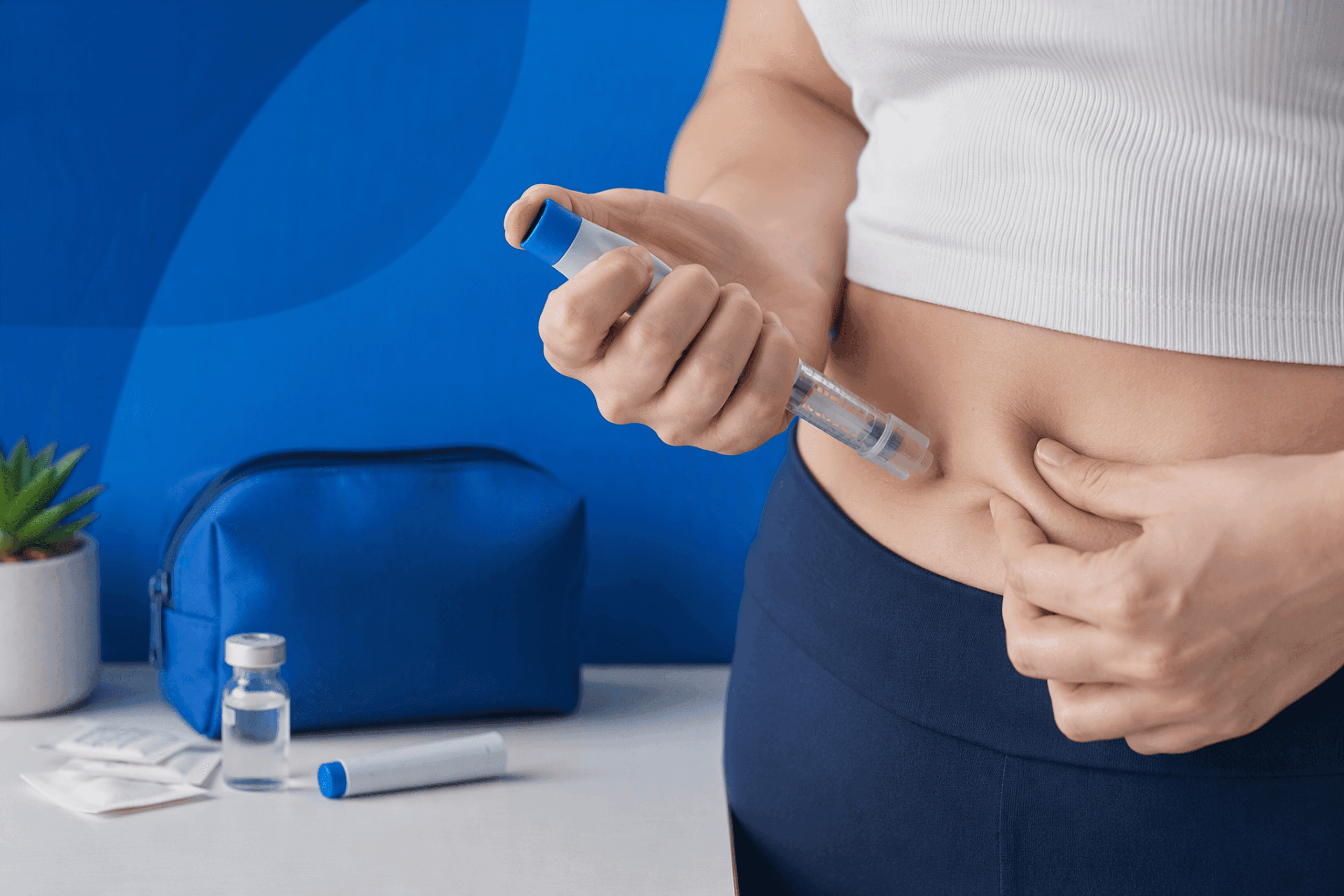
TL;DR
Learning how to give yourself an injection starts with the instructions for your prescribed drug and device. Before a subcutaneous GLP-1 injection, confirm the medicine, dose, site, device steps, and required hold time. If the device fails or the dose may be incomplete, do not inject again until your prescriber or pharmacist reviews what happened.
How to give yourself an injection: four answers before you start
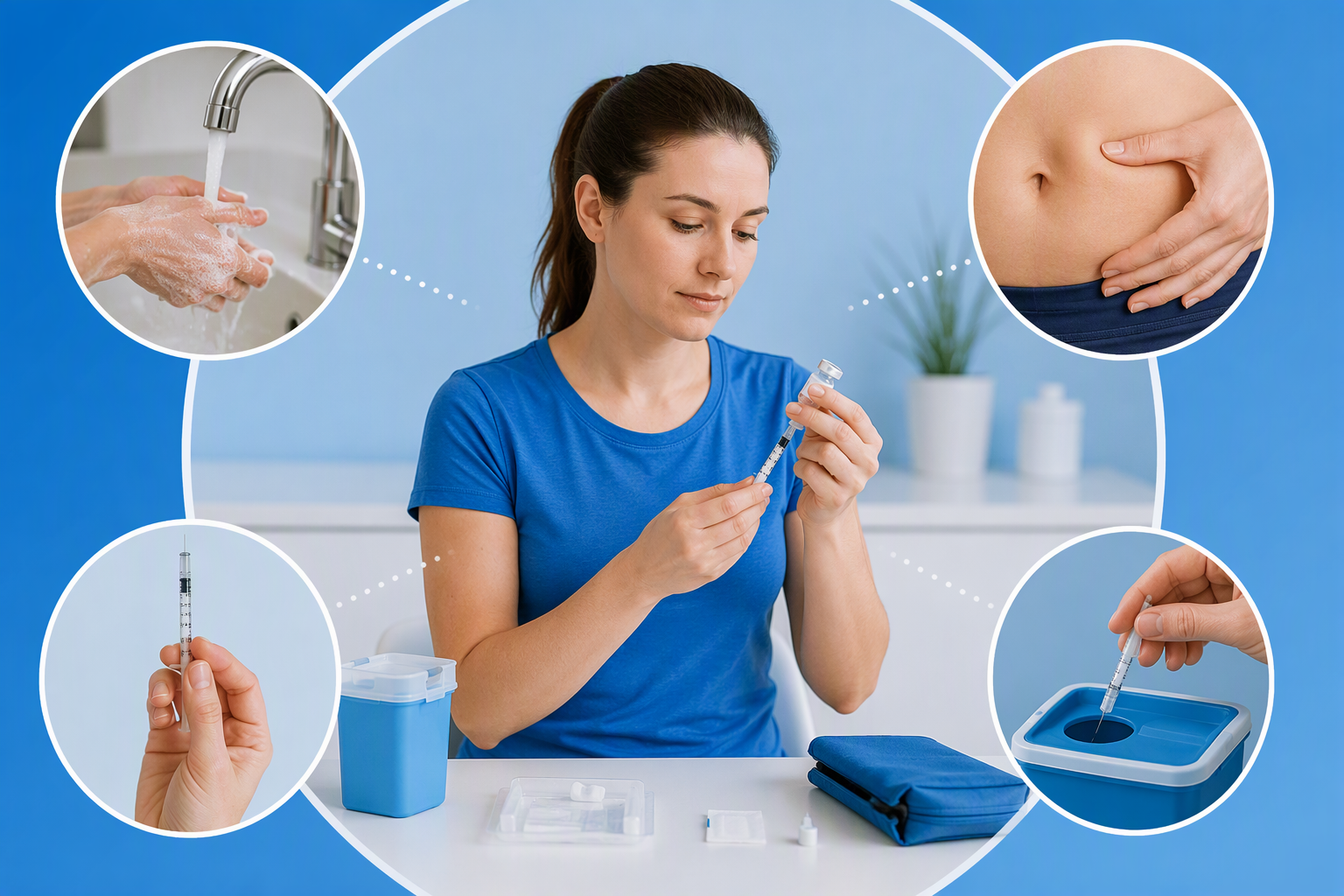
This guide covers prescribed subcutaneous injections, with a focus on GLP-1 devices. Subcutaneous medicine enters the tissue beneath the skin. Intramuscular injections enter muscle and require different instructions.
Before starting, confirm four points:
- Is this the correct drug and dose?
- Is the medicine safe to use?
- Is the chosen site approved?
- Do you understand the device and hold time?
A brief sting, small bruise, drop of blood, or temporary redness can occur. We do not promise a painless injection.
Do not proceed if the drug, dose, appearance, expiration date, storage history, or device operation is uncertain.
Use the instructions for your exact drug and device
Read the label and instructions for use when starting a drug or changing devices. Those directions override this general guide.
One pen may have a hidden needle and fixed dose. Another may require needle attachment, priming, and dose selection. We recommend device-specific training rather than copying a generic video or another patient’s method.
The same caution applies when reading tirzepatide reviews: another patient may use a different product, dose, or schedule.
When not to inject
Do not use medicine that is expired, frozen, damaged, unexpectedly cloudy, discolored, or filled with particles. Stop if the device is cracked, jammed, contaminated, or attached to a bent needle.
Keep a faulty device and its packaging so the pharmacy can inspect them. Do not retry treatment after a severe reaction unless your prescriber directs it.
Know your GLP-1 pen, prefilled syringe, or vial before injecting
GLP-1 products may come in fixed-dose pens, dose-selecting pens, prefilled syringes, or vials used with separate needles. Not every GLP-1 medicine is injected, so confirm the prescribed product and route.
Never share a pen, syringe, or needle. Use a new sterile needle for each dose when the device accepts replaceable needles.
Check the medicine and storage history
Confirm the drug name, dose, expiration date, expected appearance, and storage requirements. Some medicines require refrigeration, while others permit room-temperature storage under specific conditions.
Do not freeze medicine or leave it in direct sunlight. If warming is allowed, let it warm naturally. Do not use hot water, a heater, or a microwave.
For help planning treatment expenses, see our 2026 tirzepatide cost guide for uninsured patients before discussing refill options with your care team.
Check the device
Inspect the cap, seal, casing, needle, selector, window, and display when present. Prime only if the instructions require it.
If a needle touches fingers, clothing, or an unclean surface, replace it. Ask the pharmacy whether a contaminated or damaged device must also be replaced.
Choose a safe injection site on the abdomen, thigh, or upper arm

Use only sites approved for your medicine. Common subcutaneous sites include the abdomen, front or outer thigh, and upper arm. The abdomen and thigh are often easier to reach; the upper arm may require help.
Follow the product’s required distance from the navel. Do not inject through clothing or into skin that is bruised, hard, tender, swollen, infected, scarred, irritated, or recently used.
Rotate approved areas and record each site.
What is the least painful place to give yourself a shot?
There is no least painful site for everyone. Choose an approved area that you can see, reach, steady, and rotate. Correct placement matters more than claims that one location should hurt less.
Who needs tailored site advice?
Ask your care team for advice if you have low vision, tremor, weak hands, neuropathy, skin disease, a bleeding disorder, limited subcutaneous tissue, or previous surgery near an injection site. Caregivers should receive training for the prescribed device.
How to give yourself a subcutaneous injection step by step
Keep the device instructions open and complete one action at a time:
- Check the drug, dose, expiration date, storage history, and schedule.
- Wash your hands with soap and water.
- Gather the device, gauze, an alcohol pad if required, and a sharps container.
- Inspect the medicine and device.
- Choose an approved site and examine the skin.
- Clean the site if directed, then let it dry.
- Position the device at the stated angle.
- Inject using the prescribed trigger, button, or plunger steps.
- Hold the device in place for the required time.
- Remove it as directed.
- Press clean gauze over any blood spot without rubbing.
- Discard the sharp immediately.
- Record the date, dose, and site.
Keep the sharps container within reach before exposing the needle.
Do you pinch the skin when giving an injection?
Pinching is not a universal GLP-1 step. Do it only when the device instructions or your clinician directs you to. Needle length, device design, injection angle, and body tissue all affect the technique.
Remove the device and care for the site
Withdraw the device as instructed. Do not touch the needle to the skin again to check the dose. Apply light pressure if needed, discard the sharp, and monitor the area.
Printable first-dose stop point
Before insertion, confirm:
- Right drug
- Right dose
- Approved site
- Intact device
- Required hold time
If anything remains unclear, keep the device sterile and contact the pharmacy or care team.
How to reduce injection pain without harming the medicine
No technique guarantees a pain-free shot. To reduce discomfort, we recommend letting cleaned skin dry, using a new needle, keeping the device steady, rotating sites, and avoiding irritated skin.
Let cold medicine warm naturally only when its instructions permit. Do not take pain medicine or an antihistamine for a reaction unless a clinician approves it.
Can you numb the injection site?
Ask your prescriber or pharmacist before using a wrapped cold pack or numbing product. Never place ice directly on bare skin. Lidocaine, benzocaine, and similar products may not be suitable for every person or injection protocol.
Small reactions that can occur after a correct injection
A brief sting, tiny blood spot, small bruise, or temporary redness can occur after correct technique. Seek advice for severe pain, numbness, marked swelling, persistent bleeding, or a reaction that spreads or worsens.
What to do when you are afraid of GLP-1 injections
Injection anxiety is common, especially at the start. Sit down, arrange supplies within reach, slow your breathing, and ask a trained person to stay nearby if that helps.
Do not force the dose while panicking, shaking, or rushing. If fear interferes with safe technique, ask about nurse coaching, behavioral support, an approved alternative device, or clinician-administered treatment.
Use gradual practice
Build familiarity in stages:
- Handle the capped device.
- Watch a demonstration for that exact device.
- Practise with an approved trainer.
- Complete the first live dose with clinical support if needed.
Pause when fear blocks safe technique
Set down an unused device only as its instructions permit. Never recap a used needle or make repeated needle contacts.
Bring the device, packaging, and supplies to an in-person or video technique review if you cannot proceed safely.
Did the full dose go in? Handle leaks, clicks, and unclear dose windows
Check the device-specific counter, window, plunger, clicks, or completion signal. Some devices require continued skin contact after the visible indicator changes.
Never inject a second dose because the first looked uncertain unless a prescriber or pharmacist confirms that it is safe.
Record what happened and keep the device and packaging. Before changing treatment because of limited progress, use our four-week semaglutide weight-loss audit and review technique and adherence with your prescriber.
Compact troubleshooting table
| Problem | Action |
|---|---|
| Pain or bruising | Apply gentle pressure and monitor the area. |
| Persistent bleeding | Hold firm pressure and seek medical advice. |
| Medicine on the skin | Do not redose; contact the prescriber or pharmacist. |
| Bent needle or damaged pen | Stop and ask the pharmacy to inspect it. |
| Unclear window or clicks | Keep the device and do not redose before review. |
Accidental double dose or uncertain extra dose
Contact your prescriber, pharmacist, or local poison service promptly for product-specific guidance. Seek emergency care for severe symptoms.
Accidental needlestick
Wash the area with soap and water. Do not reuse or share the needle. Seek prompt medical advice and explain who used the needle and how the exposure happened.
Injection-site reactions: what is normal and when to get help
Local redness and bruising differ from broader effects such as nausea. Contact the care team for severe pain, numbness, marked swelling, persistent bleeding, pus, red streaks, spreading warmth, fever, or a worsening reaction.
Call emergency services for trouble breathing, fainting, widespread hives, or swelling of the face, lips, tongue, or throat.
Routine help versus emergency help
- Care team: Technique questions, mild reactions, missed doses, or device review
- Urgent care: Infection signs, severe pain, persistent bleeding, or ongoing faintness
- Emergency services: Breathing trouble, airway swelling, widespread hives, or a severe reaction
What to tell the care team
Report the drug, dose, injection time, site, device, and storage history. Describe the reaction and any other symptoms. Photos may help the team assess changes.
Dispose of needles safely and plan for storage or travel
Place used needles and single-use injection devices in an FDA-cleared sharps container. Keep it upright, closed, and away from children and pets. Never put loose needles in household trash or recycling.
Follow local disposal rules and the FDA’s sharps disposal guidance.
After using a multidose pen
Remove the needle only as the device guide directs. Store the pen according to its label and keep medicine and supplies secure.
Travel with injection medicine and sharps
Carry medicine with its prescription label and use only an approved cooling method. Check storage limits, airline requirements, destination rules, and disposal options before travelling.
Final safety recap
Follow the instructions for the exact drug and device. Do not copy intramuscular injection steps or another pen’s method. Call the care team before repeating an uncertain dose.
FAQ
Do you pinch the skin when giving an injection?
Only when the device instructions or your clinician says to. It is not required for every subcutaneous injection.
How do you give a painless injection?
A painless injection cannot be guaranteed. A new needle, dry skin, a steady device, and regular site rotation may reduce discomfort.
What is the least painful place to give yourself a shot?
There is no universal answer. Use an approved area that is easy to reach and free from bruising, swelling, tenderness, or irritation.
Is giving yourself a shot hard?
It can feel difficult at first. Device-specific training and supervised practice often make the process more manageable. Pause and request help if fear disrupts the safety checks.
Get help with your GLP-1 treatment
For prescription review, refill support, or device-specific guidance, contact our care team through usetemi.com before your next dose.