TL;DR
For anyone asking how many units is 2.5 mg of tirzepatide, the answer depends on the vial concentration and syringe type. At 20 mg/mL, 2.5 mg equals 0.125 mL, or 12.5 units on a U-100 syringe. That conversion does not apply to other concentrations. We recommend checking the dispensing label and written instructions before every injection.
How many units is 2.5 mg of tirzepatide?

At 20 mg/mL, 2.5 mg of tirzepatide equals 0.125 mL, or 12.5 U-100 units.
This answer requires two confirmed details:
- The vial concentration in mg/mL
- The syringe type and scale
A generic chart cannot replace the dispensing label. If either detail is missing, we recommend contacting the pharmacy before injecting.
The short answer at 20 mg/mL
For tirzepatide labeled 20 mg/mL:
2.5 mg ÷ 20 mg/mL = 0.125 mL
A U-100 syringe is scaled at 100 units per mL:
0.125 mL × 100 units/mL = 12.5 units
Result: 2.5 mg = 0.125 mL = 12.5 U-100 units, but only at 20 mg/mL.
Why another vial may require a different number
The prescribed milligram dose can stay the same while the liquid volume changes.
- At 20 mg/mL, 2.5 mg equals 0.125 mL, or 12.5 U-100 units.
- At 10 mg/mL, 2.5 mg equals 0.25 mL, or 25 U-100 units.
The second solution is less concentrated, so more liquid is needed.
Why there is no universal tirzepatide dosage in units
Milligrams and syringe units measure different things:
- mg describes the amount of tirzepatide.
- mL describes liquid volume.
- Syringe units are volume markings based on the syringe scale.
On a U-100 syringe, 100 units represents 1 mL. It does not mean the vial contains 100 units of tirzepatide. We therefore do not recommend using any conversion chart without confirming the concentration.
Units measure liquid volume, not the drug dose
The same volume can contain different amounts of medicine. For example, 25 U-100 units represents 0.25 mL. That volume contains 5 mg at 20 mg/mL but 2.5 mg at 10 mg/mL.
The two facts to check before converting
Before converting tirzepatide from mg to units:
- Find the concentration in mg/mL.
- Confirm that the syringe is U-100.
- Compare the calculation with the prescription label.
If the information is incomplete, ask the pharmacy. Never substitute numbers from an old vial or an online example.
How to find the tirzepatide concentration on the label
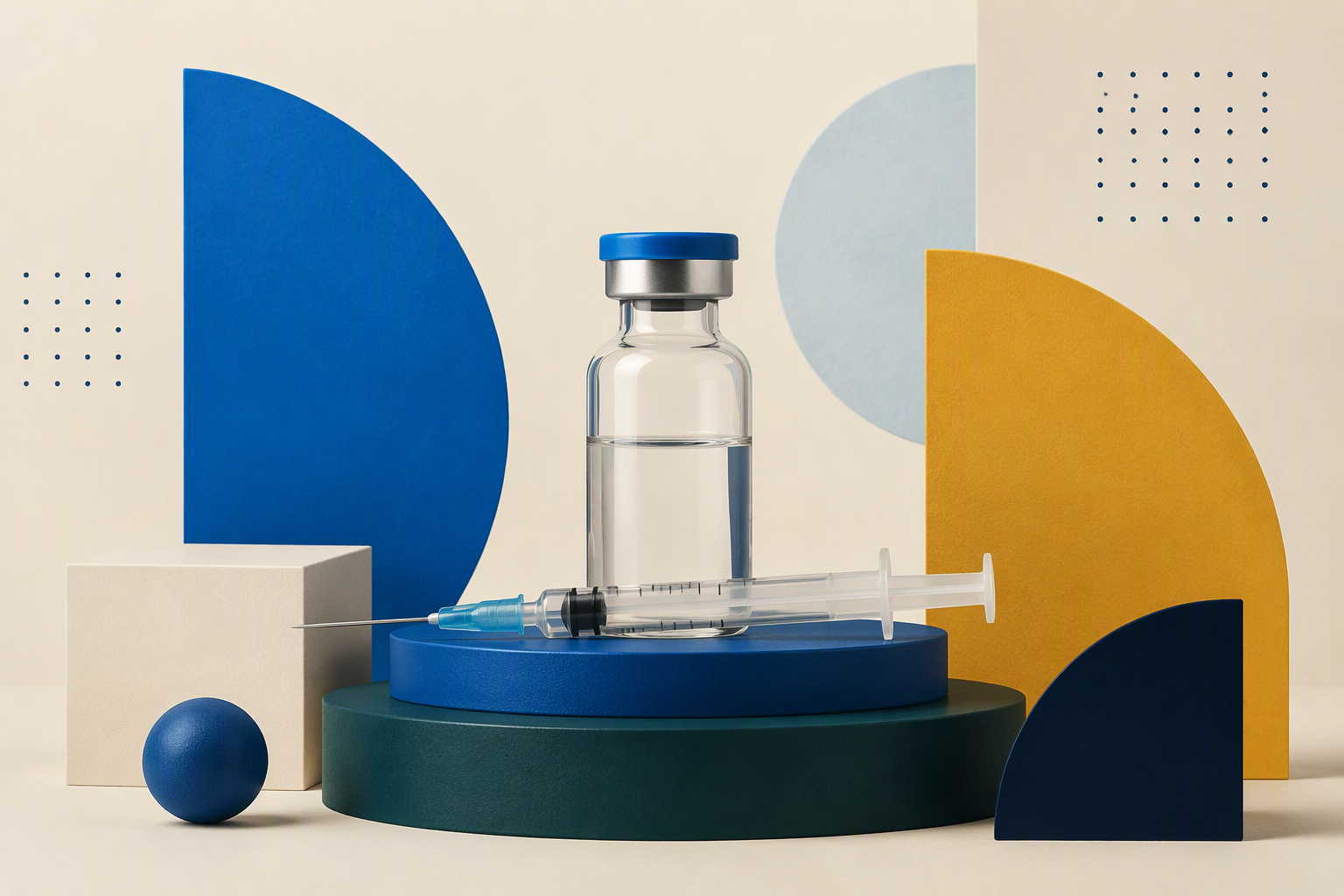
The label may list several values:
- Total vial strength: All tirzepatide in the vial
- Concentration: Tirzepatide per mL
- Vial volume: Total liquid in the vial
- Prescribed dose: Amount to inject in mg
- Injection volume: Amount to draw in mL or syringe units
“20 mg tirzepatide” alone does not establish the concentration. We also need the total volume or a stated mg/mL value.
Total vial strength is not the same as mg/mL
A vial containing 20 mg in 2 mL has a concentration of:
20 mg ÷ 2 mL = 10 mg/mL
A vial containing 20 mg in 1 mL is 20 mg/mL. Both contain 20 mg total, but a 2.5 mg dose requires different volumes:
- At 10 mg/mL: 0.25 mL, or 25 U-100 units
- At 20 mg/mL: 0.125 mL, or 12.5 U-100 units
What to do with an unclear or damaged label
Do not infer the concentration from the vial size or assume a refill matches the previous prescription. Pause the dose and contact the dispensing pharmacy or prescriber for written instructions.
How to convert a tirzepatide dose from mg to U-100 units
Use these two calculations:
Prescribed mg ÷ concentration in mg/mL = volume in mL
Volume in mL × 100 = U-100 units
The combined formula is:
Prescribed mg ÷ concentration in mg/mL × 100 = U-100 units
Worked example for 2.5 mg
Assuming 20 mg/mL tirzepatide and a U-100 syringe:
2.5 mg ÷ 20 mg/mL = 0.125 mL
0.125 mL × 100 = 12.5 U-100 units
This result is not valid for another concentration or syringe scale.
Worked example for 5 mg
Assuming 20 mg/mL and a U-100 syringe:
5 mg ÷ 20 mg/mL = 0.25 mL
0.25 mL × 100 = 25 U-100 units
Fixed-dose products have separate instructions, as covered in our Zepbound dosing and refill guide.
When the formula should not be used alone
Stop and ask the pharmacy if:
- The concentration is missing
- The syringe is not U-100
- The written directions conflict with the calculation
- The result falls between measurable syringe marks
Do not resolve a mismatch by guessing or rounding.
Tirzepatide 20 mg/mL dosing chart
This chart applies only to a 20 mg/mL concentration measured with a U-100 syringe.
| Prescribed dose | Volume | U-100 syringe units |
|---|---|---|
| 2.5 mg | 0.125 mL | 12.5 units |
| 5 mg | 0.25 mL | 25 units |
| 7.5 mg | 0.375 mL | 37.5 units |
| 10 mg | 0.5 mL | 50 units |
| 12.5 mg | 0.625 mL | 62.5 units |
| 15 mg | 0.75 mL | 75 units |
These are mathematical conversions, not prescribing recommendations. Use only the dose and administration instructions provided for the specific prescription.
How many units is 5 mg of tirzepatide?
At 20 mg/mL with a U-100 syringe, 5 mg equals 0.25 mL, or 25 units. At 10 mg/mL, it equals 0.5 mL, or 50 U-100 units.
Limits of this chart
Do not use this chart for:
- Another concentration
- A non-U-100 syringe
- A fixed-dose pen or preset device
- Choosing or increasing a dose
Medicines are not interchangeable. A semaglutide dosage chart should never be used to calculate tirzepatide.
How to read U-100 syringe marks without rounding the dose
On a U-100 syringe:
- 100 units equals 1 mL
- 50 units equals 0.5 mL
- 10 units equals 0.1 mL
Check the syringe packaging and barrel to identify the capacity and spacing between marks.
What 0.5 mL and 1 mL mean
A 0.5 mL U-100 syringe holds up to 50 units, while a 1 mL U-100 syringe holds up to 100 units. Capacity and marking precision are separate: a syringe may hold the needed volume without displaying the exact required mark.
What to do when the result falls between marks
Do not round or estimate by sight. Ask the dispensing pharmacy whether a more precise syringe or different written instruction is needed.
Why a refill can use a different number of units
A refill may have a different concentration, particularly when prescriptions come from different dispensing pharmacies. Read every new label before the first dose.
| Prescribed dose | Concentration | Volume | U-100 units |
|---|---|---|---|
| 5 mg | 20 mg/mL | 0.25 mL | 25 units |
| 5 mg | 10 mg/mL | 0.5 mL | 50 units |
The dose remains 5 mg, but the required volume changes. Never copy the previous vial’s unit count onto a refill.
Check these items on every refill
Confirm the dose in mg, concentration in mg/mL, directed volume, syringe type, storage directions, and beyond-use date. We recommend keeping each vial with its current instructions.
If the new instructions differ from the old instructions
Contact the dispensing pharmacy before injecting. Ask it to confirm the dose in mg, volume in mL, and U-100 unit count in writing. Our prescription refill support can also help identify the appropriate next step.
Fixed-dose tirzepatide products and multi-dose vials use different instructions
Fixed-dose products and multi-dose vials do not necessarily use the same delivery method. Never apply a vial conversion chart to a pen or preset device.
When a unit conversion may apply
Conversion may be appropriate when the label provides a concentration in mg/mL, the medicine must be drawn into a syringe, the syringe scale is confirmed, and the result agrees with the dispensing instructions.
When not to convert
Do not convert a preset device dose into syringe units, transfer medicine from a device, or apply compounded-vial instructions to a fixed-dose product. Follow the product-specific directions.
When to stop and get help before or after a dose
Pause before injecting if the label is unreadable, the concentration is missing, the syringe is wrong, or the directions conflict. The same applies to damaged medicine or a passed beyond-use date.
Before injecting
Confirm the patient name, drug name, dose, concentration, volume, syringe type, storage conditions, and beyond-use date. Ask the pharmacy or prescriber for clarification if anything is uncertain.
After a possible dosing error
Do not take extra medicine to compensate unless a clinician directs it. Record the concentration, estimated volume, injection time, and any symptoms. Contact the prescriber, pharmacy, or Poison Control. Our GLP-1 overdose response guide provides additional steps. Seek urgent medical help for severe symptoms.
Storage and vial handling
Follow the dispensing label because storage requirements may vary. Do not use a vial with a damaged seal or unexpected appearance, and do not extend its beyond-use date based on general online advice.
FAQ
Is 2.5 mg of tirzepatide always 12.5 units?
No. It equals 12.5 units only at 20 mg/mL with a U-100 syringe. Another concentration produces a different unit count.
How many units is 5 mg of tirzepatide?
At 20 mg/mL with a U-100 syringe, 5 mg equals 0.25 mL, or 25 units. Confirm the label before using that conversion.
What does 20 mg on a tirzepatide vial mean?
It may describe the total medicine in the vial rather than the concentration. Look for the total volume or a concentration stated in mg/mL.
Can I round to the nearest syringe mark?
Not without written direction from the pharmacy or prescriber. If the calculated amount falls between marks, ask whether a different syringe or instruction is required.
Why does my refill use more units?
The concentration may have changed. Check the new label rather than relying on the previous vial’s directions.
Get help with your prescription instructions
If the concentration, syringe type, or refill directions remain unclear, pause the dose and contact the dispensing pharmacy, prescriber, or Temi support to confirm the written instructions before injecting.