

TL;DR
If you are asking, “Why am I not losing weight on tirzepatide?”, treatment has not necessarily failed. The dose may be too early to judge, while constipation, fluid shifts, or normal scale variation can hide progress. Before changing the dose, we recommend reviewing dose timing, missed injections, side effects, weekly weight averages, waist measurements, and other medicines with the prescriber.
Why am I not losing weight on tirzepatide? Start with your dose stage

No weight loss can reflect several different situations: limited treatment time, an early titration dose, a temporary stall, a longer plateau, or a weak response. One weigh-in cannot distinguish between them.
A higher dose is not always the first answer. We recommend asking the prescriber to review time at the current dose, missed doses, injection technique, side effects, and the overall trend.
For a wider look at food, sleep, medicines, and tracking, see our four-week semaglutide audit. Many of its practical checks also apply during prescribed tirzepatide treatment.
Four facts to collect before judging the result
Bring a simple record to the next appointment:
- Treatment and dose-change dates
- Weight readings taken under similar conditions
- Waist measurements taken consistently
- Notes about appetite, constipation, vomiting, missed doses, and injection problems
This information helps us and the prescriber see whether the trend is flat, uneven, or temporarily hidden.
What each tirzepatide dose can tell you
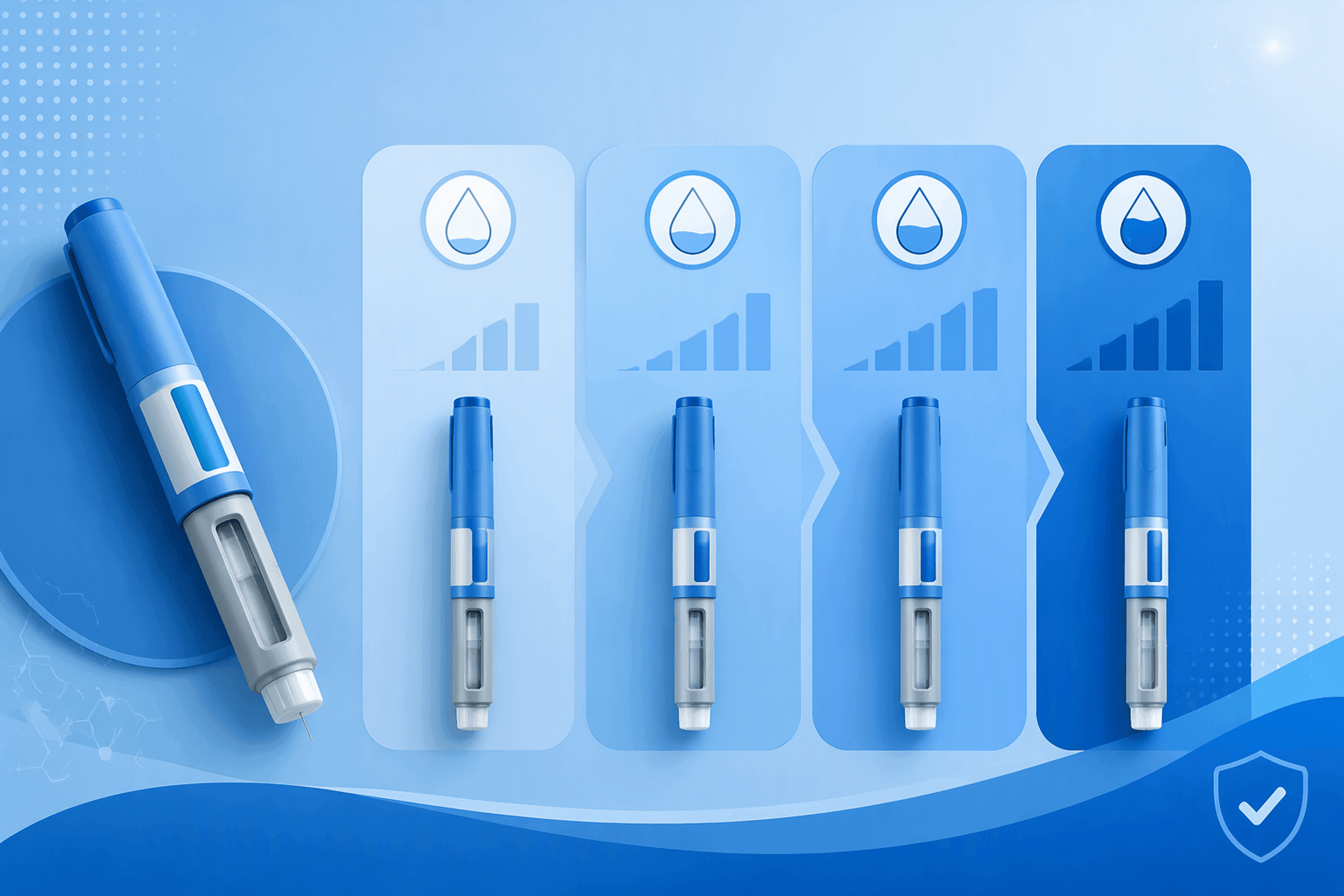
Tirzepatide is generally introduced gradually according to the prescribed titration plan. Early doses allow the prescriber to assess tolerability, so a lack of immediate weight loss does not automatically indicate nonresponse.
| Dose stage | What the prescriber may assess | What no scale change may mean |
|---|---|---|
| Starting dose | Initial tolerability and side effects | It may be too early to judge |
| Early maintenance or titration dose | Appetite, adherence, trend, and side effects | More time or a dose review may be needed |
| Intermediate dose | Progress toward an appropriate maintenance dose | Tolerability may affect the schedule |
| Higher maintenance dose | Sustained benefit, safety, and treatment value | A flat trend warrants a broader review |
| Highest prescribed dose | Overall response after an adequate trial | Continuing, switching, or stopping may need discussion |
Do not increase the dose without clinical guidance. No dose guarantees a particular amount or pace of weight loss.
2.5 mg: the starting dose
The 2.5 mg dose is used to begin treatment. Starting gradually can help the prescriber monitor stomach and bowel effects before considering the next stage.
Finishing the initial dose period without weight loss does not, by itself, prove that tirzepatide will not work. The next step should follow the prescription and the clinician’s assessment.
5 mg: an early maintenance dose
No loss at 5 mg may reflect limited time, constipation, fluid changes, or a weak response at that dose. The prescriber should check whether appetite has changed, whether each dose was taken correctly, and whether side effects remain manageable.
The decision to stay or advance should depend on measured benefit and tolerability—not another person’s results online.
7.5 mg and 12.5 mg: titration stages
These doses may be used while moving toward a prescribed maintenance dose. A prescriber may allow more time at a stage when nausea, constipation, or other adverse effects require attention.
Slower titration is not necessarily a failed plan. In some cases, it is the safer approach.
10 mg and 15 mg: higher maintenance doses
Clinical trials have found that tirzepatide can support weight loss, but trial averages do not predict an individual result. People respond differently, and side effects may limit which dose is appropriate.
If there is still no meaningful trend after sufficient time at the highest tolerated prescribed dose, request a full clinical review rather than changing the dose yourself.
Why am I not losing weight on tirzepatide 5 mg or 7.5 mg?

A lower appetite suggests that tirzepatide is having an effect, but it does not show how much total food and drink intake has changed. Nor does it prove how much body fat has been lost.
Several flat readings may be caused by constipation, menstrual-cycle changes, or shifts in body water. We prefer weekly weight trends and consistent waist measurements over reactions to individual weigh-ins.
Bring these details to the next refill visit:
- Time at the current dose
- Weight and waist trends
- Side effects and bowel changes
- Missed or late injections
- Changes in appetite and meal patterns
When more time may be reasonable
Waiting may make sense when the dose changed recently, weekly averages are still falling, or temporary factors could explain a brief increase. Side effects may also need to settle before another dose is considered.
The prescriber should confirm the plan. Side effects are a reason to reassess, not to rush escalation.
When to ask for a dose review
Request a review when weight and waist measurements remain flat over a sustained period, despite taking the medicine as prescribed. A review is also appropriate if hunger has not changed or a benefit seen earlier has faded.
The outcome may be more time, an injection-technique check, further medical assessment, a dose change, or a different treatment.
Why am I not losing weight on tirzepatide 15 mg?
No loss at 15 mg deserves a broader review, particularly after an adequate prescribed trial. The clinician should first confirm that the trend is genuinely flat and that the medicine was obtained, stored, prepared, and used correctly.
Continued treatment should depend on benefit, side effects, cost, and clinical advice. Research reported by Weill Cornell Medicine found that continued treatment helped participants maintain weight loss, while discontinuation was associated with regain. That finding does not mean treatment should continue when an individual sees little benefit.
What a prescriber may review at 15 mg
The review may cover:
- Time on the current dose and total treatment duration
- Weight averages and waist measurements
- Dose timing, injection technique, storage, and product source
- Eating patterns, sleep, alcohol intake, and physical activity
- PCOS, menopause, hypothyroidism, or sleep apnea
- Other prescription medicines that may affect weight
Repeating the same plan indefinitely may not provide enough value when sustained progress is absent.
Do not take more than prescribed
Extra doses or shorter injection intervals may increase the risk of serious adverse effects. They are not a safe way to break a plateau.
Contact the prescriber before changing the dose or schedule. Do not combine tirzepatide with another GLP-1 medicine unless a qualified clinician has specifically directed it.
Is it a plateau, hidden progress, or true nonresponse?
These patterns are not interchangeable:
| Pattern | Typical description | What to check |
|---|---|---|
| Short stall | Brief scale pause or fluctuation | Weekly average and temporary causes |
| Plateau | Sustained flat trend after previous loss | Weight, waist, adherence, and dose history |
| Hidden progress | Scale is flat while waist or fit changes | Consistent measurements |
| Possible nonresponse | Little meaningful change after an adequate trial | Technique, adherence, conditions, and medicines |
A plateau follows earlier progress. Possible nonresponse means there has been little meaningful change despite an appropriate prescribed trial. Both require more context than one difficult week.
Use a weekly weight average
When practical, weigh under similar conditions. Compare weekly averages instead of reacting to one high reading.
Waist measurements can provide useful context, but they do not replace weight data or clinical assessment.
Check causes of temporary scale weight
Short-term changes may reflect:
- Constipation
- Sodium or carbohydrate changes
- Menstrual-cycle shifts
- Strenuous exercise
- Poor sleep
- Travel or schedule disruption
Persistent swelling or rapid, unexplained gain needs medical review rather than being dismissed as normal fluid weight.
What can limit weight loss even when appetite is lower?
A weak response is not proof of poor discipline. Biology, dose, sleep, medical conditions, eating patterns, and other medicines can all influence results.
Lower appetite may not reduce overall intake when alcohol, sweet drinks, frequent snacks, or calorie-dense meals remain common. Eating as little as possible is not the solution; it may worsen nausea, fatigue, constipation, and muscle loss.
Conditions worth reviewing
PCOS, menopause, untreated hypothyroidism, and sleep apnea may affect weight, energy, sleep, or body composition. A clinician can assess symptoms and decide whether testing is appropriate.
People taking thyroid medicine may also benefit from a levothyroxine dose and absorption check.
Medicines worth reviewing
Steroids, insulin, and some psychiatric medicines may make weight management harder. Never stop a prescribed medicine without guidance. Ask whether its purpose, dose, or potential alternatives should be reviewed.
Protect muscle while weight falls
Adequate nutrition and appropriate resistance exercise can help protect muscle. Protein needs should be personalised, especially when kidney disease or another health condition is present.
Our guide to supplement support during prescribed GLP-1 care explains what to consider before adding a product. Supplements cannot replace food or medical care.
What to ask your prescriber before raising the dose
Ask the clinician how progress will be measured before the next refill. A direct question can help: “Based on my weight trend, waist measurements, side effects, and time at this dose, should I stay, increase, switch, or stop?”
Bring this one-page record
Include dose dates, weight averages, waist measurements, appetite changes, bowel symptoms, vomiting or hydration problems, and a complete medication list.
Patients can use Temi to keep medications in one place before the visit. An accurate list helps the care team identify duplicate therapy, interactions, and medicines that may affect weight.
Questions to use at the visit
Ask:
- Have I used this dose long enough to assess it?
- Does my trend suggest a stall, plateau, or weak response?
- Could another medicine or condition be interfering?
- What should we expect before the next refill?
- When would switching or stopping make sense?
Tirzepatide side effects: when a stalled scale is not the main concern
Tirzepatide may cause nausea, diarrhea, vomiting, constipation, abdominal discomfort, indigestion, or injection-site reactions. Persistent symptoms that interfere with eating or drinking need clinical advice.
Seek prompt medical care
Seek urgent help for severe or persistent abdominal pain, repeated vomiting, inability to keep fluids down, faintness, very low urine output, breathing difficulty, or swelling of the face, lips, tongue, or throat.
Next step
Do not raise, double, or repeat a dose to force weight loss. Contact the prescriber when side effects persist or the response remains unclear.
FAQ
How long should I wait before deciding tirzepatide is not working?
There is no single timeline for everyone. The prescriber should consider dose stage, treatment duration, adherence, side effects, and weight and waist trends before judging the response.
Can constipation hide weight loss on tirzepatide?
Yes. Constipation can temporarily affect scale weight. Track bowel changes and contact the clinician if constipation is persistent, painful, or severe.
Does lower appetite mean tirzepatide is working?
It shows an appetite effect, but it does not guarantee weight loss. Total intake, medical conditions, activity, sleep, other medicines, and individual response still matter.
Can PCOS make it harder to lose weight?
PCOS can complicate weight management through hormonal and metabolic effects, but weight loss remains possible. A clinician should review symptoms, related conditions, and treatment options.
What side effects need urgent attention?
Severe abdominal pain, repeated vomiting, dehydration, breathing trouble, or swelling of the face or throat requires prompt medical care.
Review your tirzepatide plan before your next refill
Gather your dose dates, weekly weight averages, waist measurements, side effects, appetite notes, and medication list, then book a prescriber review to decide whether staying, increasing, switching, or stopping offers the best balance of benefit, cost, and safety.