

TL;DR
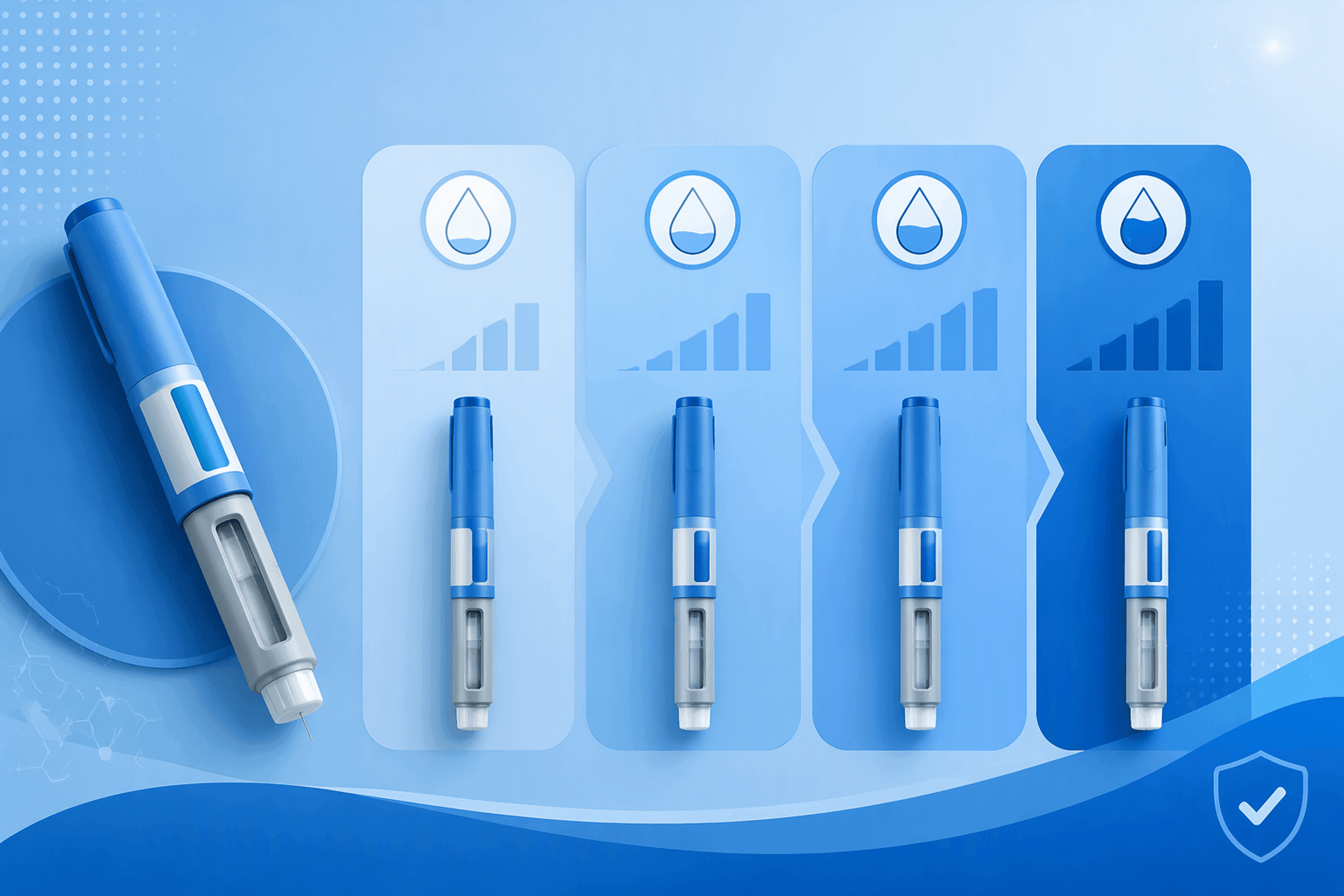
This Ozempic dosage chart starts at 0.25 mg once weekly for four weeks. With prescriber approval, the dose may then increase to 0.5 mg, 1 mg, or 2 mg based on treatment response and tolerability. Four weeks is the earliest review point, not an automatic instruction to increase. The highest FDA-labeled Ozempic dose is 2 mg weekly.
Ozempic dosage chart: 0.25 mg, 0.5 mg, 1 mg, and 2 mg

Standard Ozempic dosing begins at 0.25 mg once weekly for four weeks. A prescriber may approve 0.5 mg from week five, followed by 1 mg or 2 mg if further blood sugar control is needed and the medication remains tolerable.
Week-by-week Ozempic dosing chart
| Treatment period | Weekly dose | Purpose |
|---|---|---|
| Weeks 1–4 | 0.25 mg | Starting dose |
| Week 5 and later | 0.5 mg | Maintenance dose |
| After at least four weeks at 0.5 mg | 1 mg | Higher maintenance dose |
| After at least four weeks at 1 mg | 2 mg | Maximum labeled dose |
Each dose is taken once weekly. The prescription label and prescriber’s directions determine the actual schedule.
For more background on approved uses and major risks, read our guide to what Ozempic is and how it works.
Is 0.25 mg a treatment dose?
The 0.25 mg dose introduces the body to semaglutide and may make stomach-related side effects easier to manage. It is not a maintenance dose for blood sugar control.
Completing four weeks does not make an increase automatic. If side effects remain difficult, we recommend contacting the prescriber before taking 0.5 mg.
When should an Ozempic dose increase?
The calendar sets the earliest review point, but it does not decide the dose. Before an increase, we recommend reviewing:
- Blood sugar and agreed treatment goals
- Nausea, vomiting, bowel changes, or abdominal pain
- Missed doses and weekly consistency
- Other medicines, especially insulin
- Food and fluid intake
- Current health conditions
Never raise, lower, split, or repeat a dose without clinical instructions.
Reasons a prescriber may keep the same dose
A prescriber may continue the current dose when it is meeting the treatment goal or when side effects remain troublesome. An unstable schedule caused by missed injections may also need attention before titration continues.
The aim is a dose that works and remains manageable—not the fastest climb to 2 mg.
When a dose may be delayed, held, or reduced
Persistent side effects may call for slower titration. Vomiting, poor fluid intake, or possible dehydration requires clinical advice.
Illness, a planned procedure, or a change in another diabetes medicine may also affect the plan. We advise asking the prescribing clinician for specific directions rather than adjusting the dose independently.
Why a weight plateau does not settle the dose question
A plateau alone does not show that the dose should increase. The prescriber may review missed injections, appetite, food intake, activity, sleep, other medicines, and health conditions first.
A higher dose does not guarantee additional weight loss and may make side effects harder to tolerate.
What is the highest dose of Ozempic?

The highest FDA-labeled Ozempic dose is 2 mg once weekly. Doses above 2 mg per week are not part of the labeled schedule.
Do not combine injections or count extra pen clicks to exceed the prescribed amount.
Maximum dose of Ozempic for weight loss
Ozempic does not have an FDA-approved weight-loss dosing schedule. Clinicians may prescribe it off-label for weight management, but the labeled Ozempic maximum remains 2 mg weekly.
Ozempic for type 2 diabetes versus off-label weight management
Ozempic is FDA-approved to treat type 2 diabetes. Off-label use means an approved medication is being prescribed for a purpose outside its FDA-approved labeling.
That distinction matters: off-label prescribing does not turn a Wegovy schedule into an Ozempic schedule.
Ozempic vs. Wegovy doses: Do not swap the schedules
Ozempic and Wegovy both contain semaglutide, but they have different approved uses, dose schedules, devices, and instructions. Wegovy is the semaglutide brand with a specific FDA indication for chronic weight management.
Our Wegovy dose and refill guide explains why product-specific directions matter.
Why the same active drug does not mean the same prescription
A shared active ingredient does not make two branded products interchangeable. The prescribed brand, treatment goal, dose steps, and device instructions all matter.
Changing products requires a new prescription with clear directions.
How to check which semaglutide product you received
Read the brand name on the carton and device, then compare the strength and available dose with the pharmacy label.
If the product, device, or directions have changed, contact the dispensing pharmacy before using it.
Ozempic pen strengths and refill checks
Ozempic is supplied in prefilled pens containing different total amounts of medication, including 2 mg, 4 mg, and 8 mg pens. These pens are designed to deliver different prescribed doses.
Always check the current packaging and pharmacy label rather than relying on the pen’s appearance.
A different pen does not always mean a changed prescription
Compare every refill with the previous carton, pen label, and pharmacy directions. If the new pen offers a different selectable dose, pause and confirm the prescription. Pen color alone is not enough.
Do not count clicks to create an unmarked dose
Use only a dose the pen is designed to select and the prescriber has ordered. Do not estimate an unmarked amount by counting clicks or using leftover liquid.
Ozempic vials, syringes, milligrams, and units
Branded Ozempic comes in prefilled pens, not vials. A vial may contain compounded semaglutide instead.
Milligrams cannot be converted safely to syringe units without the exact concentration and syringe scale. We recommend confirming the amount with the prescriber or dispensing pharmacy rather than using a general online conversion chart.
Missed Ozempic doses and changing the injection day
Take a missed Ozempic dose within five days. If more than five days have passed, skip that dose and resume the regular schedule.
Never take two doses at once to make up for one that was missed.
What to do after a missed Ozempic dose
If the dose is still within the five-day window, take it and follow the prescribed weekly plan. If it falls outside that window, skip it.
After missing several weekly doses, ask the prescriber how to restart. Returning immediately to the previous dose may worsen side effects.
How to change the weekly injection day
At least 48 hours should pass between Ozempic injections when changing the weekly dose day. Choose a day that supports a consistent routine, and confirm the change with the care team if the timing is unclear.
Dose-related side effects and warning signs
Stomach-related effects may begin or worsen after starting Ozempic or increasing the dose. Ozempic may also raise the risk of low blood sugar when taken with insulin or certain other diabetes medicines.
Common effects after starting or increasing a dose
Common effects include nausea, vomiting, diarrhea, constipation, and abdominal pain. Small meals and steady fluid intake may help, but persistent symptoms deserve clinical review.
Our guide to prescription nausea medicine covers treatment options and their risks.
Signs that need prompt medical care
Seek prompt advice for severe or lasting abdominal pain, repeated vomiting, very low urine output, dizziness, or an inability to keep fluids down. Marked vision changes and symptoms involving the gallbladder or kidneys also need assessment.
When to seek emergency help
Trouble breathing, swelling of the face or throat, or a severe rash may indicate a serious allergic reaction. Confusion, loss of consciousness, or a seizure may occur with severe low blood sugar.
Use local emergency services for severe or rapidly worsening symptoms.
How to use Ozempic once a week
Ozempic is injected under the skin once weekly. Follow the current Instructions for Use for preparing the pen, selecting the dose, injecting, storing the medication, and disposing of needles.
A pre-injection dose check
Before injecting, confirm:
- Patient and drug name
- Pen strength
- Prescribed dose
- Weekly injection day
- Expiration date
- Liquid appearance
Stop and contact the pharmacy if the pen does not match the prescription or cannot select the prescribed dose.
Using Ozempic with insulin
Do not mix Ozempic and insulin in the same injection. Follow the prescriber’s instructions for separate injections, blood sugar monitoring, and insulin dosing.
Ozempic dosing questions to ask before the next refill
We recommend bringing the current pen, prescription label, dose history, missed-dose record, side effects, and treatment results to the next review.
Questions for the prescriber
- What dose am I taking now?
- What goal are we using to assess it?
- Should I remain at this dose if side effects continue?
- What should I do after missing multiple doses?
Questions for the dispensing pharmacy
- Does this pen match my prescribed dose?
- Which doses can it select?
- Have the product or directions changed?
- If I received a vial, what product and concentration is it?
Final dose safety check
Remember: 0.25 mg is the starting dose, while 2 mg weekly is the highest labeled dose. Dose increases are not automatic, Ozempic and Wegovy schedules are not interchangeable, and milligram-to-unit conversions should never be guessed.
FAQ
Can I stay on 0.5 mg Ozempic instead of increasing?
Yes, if the prescriber agrees that 0.5 mg is meeting the treatment goal and remains tolerable. Reaching the next review point does not require an increase.
What happens if I take too much Ozempic?
Contact the prescriber, a poison control service, or urgent medical care. Too much semaglutide may cause severe nausea, vomiting, dehydration, or low blood sugar, particularly alongside insulin or certain diabetes medicines.
Can I split an Ozempic weekly dose?
Standard Ozempic dosing is once weekly. Do not split doses, count clicks, combine injections, or use leftover medication to create an unmarked amount unless the prescriber gives specific instructions.
Does more Ozempic cause more weight loss?
Not necessarily. A higher dose may increase side effects without guaranteeing greater weight loss. The prescriber should review the full treatment response before changing the dose.
Review your prescription before your next dose
Use Temi to keep your medications and refill details in one place, then confirm the drug, pen strength, prescribed dose, and weekly schedule before every injection.