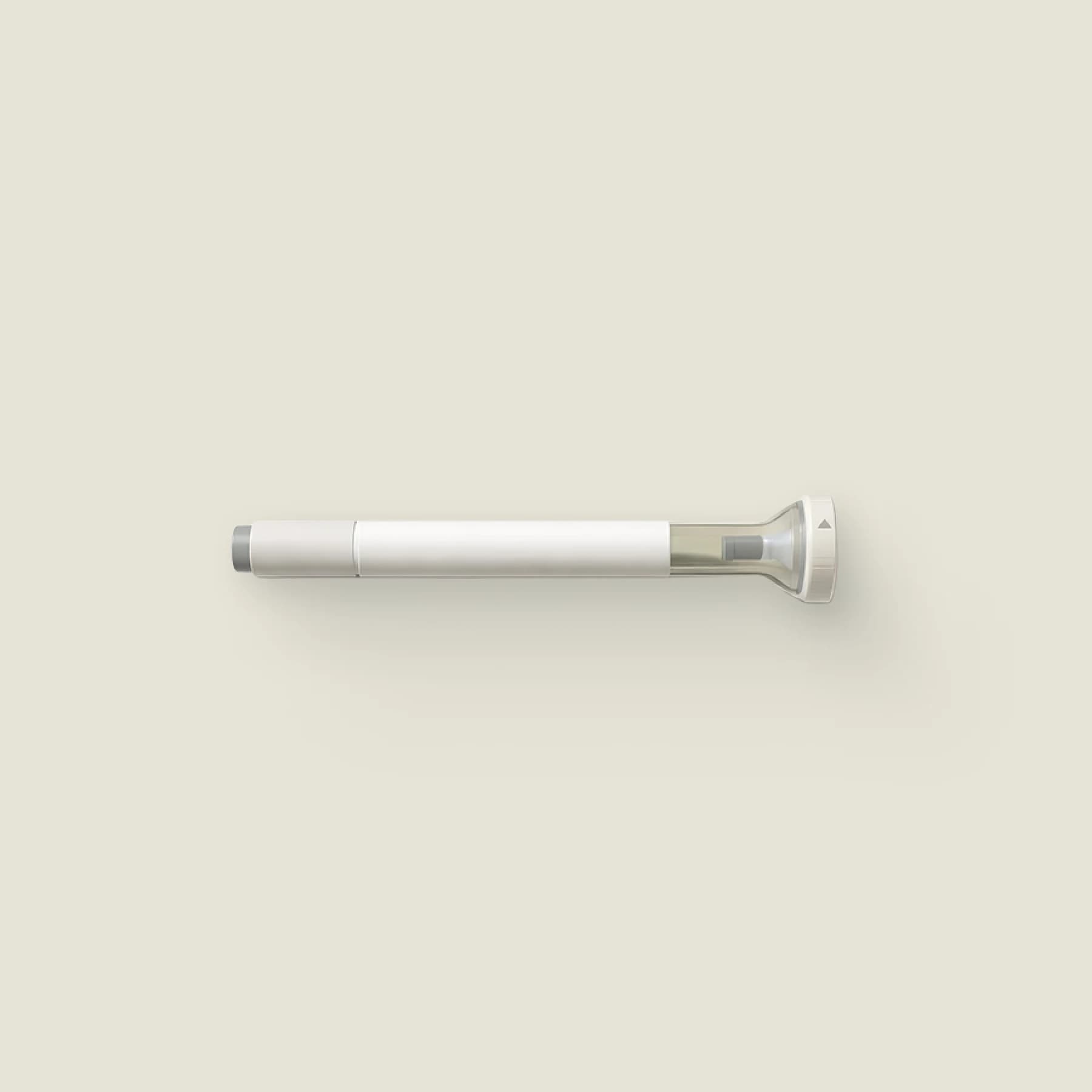
Ovidrel®(choriogonadotropin alfa)
Savings at a Glance
This is an out-of-pocket price. If you have insurance, check your co-pay first—it may be even lower. Select your form and strength to see your savings.
How it Works
Present the coupon at your pharmacy to claim your savings.


usetemi.com
Coupon
BIN
610020
PCN
PDMI
Group
99996218
Member ID
ERXEMDSERONO
Program participants must be 18 years or older, have a valid prescription for participating EMD Serono Fertility medications for dispensing in the United States, except where prohibited by law, and pay for their participating fertility medications out-of-pocket, without seeking reimbursement from any private, commercial, or government health insurance or benefit program. This program cannot be used if any part of a program participant’s prescription is covered by any federal, state, or government-funded healthcare program (including but not limited to, Medicare, Medicare Advantage, Medicaid, TRICARE, Department of Veterans Affairs, Department of War, etc.), or a state pharmaceutical assistance program, the Medicare Prescription Drug Program (Part D). No claim for reimbursement of the out-of-pocket expense amount covered by the program shall be submitted to any third-party payer, whether public or private.
This coupon also works for
This coupon can also be redeemed for these other EMD Serono medications. No additional coupon necessary.
Only Available at These Pharmacies
Drug Details
INDICATIONS AND USAGE Ovidrel ® PreFilled Syringe (choriogonadotropin alfa injection) is indicated for the induction of final follicular maturation and early luteinization in infertile women who have undergone pituitary desensitization and who have been appropriately pretreated with follicle stimulating hormones as part of an Assisted Reproductive Technology (ART) program such as in vitro fertilization and embryo transfer. Ovidrel ® PreFilled Syringe is also indicated for the induction of ovulation (OI) and pregnancy in anovulatory infertile patients in whom the cause of infertility is functional and not due to primary ovarian failure. Selection of Patients Before treatment with gonadotropins is instituted, a thorough gynecologic and endocrinologic evaluation must be performed. This should include an assessment of pelvic anatomy. Patients with tubal obstruction should receive Ovidrel ® PreFilled Syringe only if enrolled in an in vitro fertilization program. Primary ovarian failure should be excluded by the determination of gonadotropin levels. Appropriate evaluation should be performed to exclude pregnancy. Patients in later reproductive life have a greater predisposition to endometrial carcinoma as well as a higher incidence of anovulatory disorders. A thorough diagnostic evaluation should always be performed in patients who demonstrate abnormal uterine bleeding or other signs of endometrial abnormalities before starting FSH and Ovidrel ® PreFilled Syringe therapy. Evaluation of the partner's fertility potential should be included in the initial evaluation.
CONTRAINDICATIONS Ovidrel ® PreFilled Syringe (choriogonadotropin alfa injection) is contraindicated in women who exhibit: Prior hypersensitivity to hCG preparations or one of their excipients. Primary ovarian failure. Uncontrolled thyroid or adrenal dysfunction. An uncontrolled organic intracranial lesion such as a pituitary tumor. Abnormal uterine bleeding of undetermined origin (see " Selection of Patients " ). Ovarian cyst or enlargement of undetermined origin (see " Selection of Patients " ). Sex hormone dependent tumors of the reproductive tract and accessory organs. Pregnancy.
ADVERSE REACTIONS (see WARNINGS ) The safety of Ovidrel ® was examined in four clinical studies that treated 752 patients of whom 335 received Ovidrel ® 250 µg following follicular recruitment with gonadotropins. When patients enrolled in four clinical studies (3 in ART and one in OI) were injected subcutaneously with either Ovidrel ® or an approved urinary-derived hCG, 14.6 % (49 of 335 patients) in the Ovidrel ® 250 µg group experienced application site disorders compared to 28% (92 of 328 patients) in the approved u-hCG group. Adverse events reported for Ovidrel ® 250 µg occurring in at least 2% of patients (regardless of causality) are listed in Table 9 for the 3 ART studies and in Table 10 for the single OI study. Table 9: Incidence of Adverse Events of r-hCG in ART (Studies 7648, 7927, 9073) Body System Ovidrel ® 250 µg (n=236) Preferred Term Incidence Rate % (n) At Least One Adverse Event 33.1% (78) Application Site Disorders 14.0% (33) Injection Site Pain 7.6% (18) Injection Site Bruising 4.7% (11) Gastro-Intestinal System Disorders 8.5% (20) Abdominal Pain 4.2% (10) Nausea 3.4% ( 8) Vomiting 2.5% ( 6) Secondary Terms (Post-Operative Pain) 4.7% (11) Post-Operative Pain 4.7% (11) Adverse events not listed in Table 9 that occurred in less than 2% of patients treated with Ovidrel ® 250 µg whether or not considered causally related to Ovidrel ® , included: injection site inflammation and reaction, flatulence, diarrhea, hiccup, ectopic pregnancy, breast pain, intermenstrual bleeding, vaginal hemorrhage, cervical lesion, leukorrhea, ovarian hyperstimulation, uterine disorders, vaginitis, vaginal discomfort, body pain, back pain, fever, dizziness, headache, hot flashes, malaise, paraesthesias, rash, emotional lability, insomnia, upper respiratory tract infection, cough, dysuria, urinary tract infection, urinary incontinence, albuminuria, cardiac arrhythmia, genital moniliasis, genital herpes, leukocytosis, heart murmur and cervical carcinoma. Table 10: Incidence of Adverse Events of r-hCG in Ovulation Induction (Study 8209) Body System Ovidrel ® 250 µg (n=99) Preferred Term Incidence Rate % (n) At Least One Adverse Event 26.2% (26) Application Site Disorders 16.2% (16) Injection site pain 8.1% (8) Injection site inflammation 2.0% (2) Injection site bruising 3.0% (3) Injection site reaction 3.0% (3) Reproductive Disorders, Female 7.1% (7) Ovarian cyst 3.0% (3) Ovarian hyperstimulation 3.0% (3) Gastro-Intestinal System Disorders 4.0% (4) Abdominal pain 3.0% (3) Additional adverse events not listed in Table 10 that occurred in less than 2% of patients treated with Ovidrel ® 250 µg, whether or not considered causally related to Ovidrel ® , included: breast pain, flatulence, abdominal enlargement, pharyngitis, upper respiratory tract infection, hyperglycemia and pruritis. The following medical events have been reported subsequent to pregnancies resulting from hCG therapy in controlled clinical studies: Spontaneous Abortion Ectopic Pregnancy Premature Labor Postpartum Fever Congenital Abnormalities Of 125 clinical pregnancies reported following treatment with FSH and Ovidrel ® 250 µg or 500 µg, three were associated with a congenital anomaly of the fetus or newborn. Among patients receiving Ovidrel ® 250 µg, cranial malformation was detected in the fetus of one woman and a chromosomal abnormality (47, XXX) in another. These events were judged by the investigators to be of unlikely or unknown relation to treatment. These three events represent an incidence of major congenital malformations of 2.4%, which is consistent with the reported rate for pregnancies resulting from natural or assisted conception. In a woman who received Ovidrel ® 500 µg, one birth in a set of triplets was associated with Down's syndrome and atrial septal defect. This event was considered to be unrelated to the study drug. The following adverse reactions have been previously reported during menotropin therapy: Pulmonary and vascular complications (see " Warnings " ) Adnexal torsion (as a complication of ovarian enlargement) Mild to moderate ovarian enlargement Hemoperitoneum There have been infrequent reports of ovarian neoplasms, both benign and malignant, in women who have undergone multiple drug regimens for ovulation induction; however, a causal relationship has not been established. Post-Marketing Experience In addition to adverse events reported from clinical trials, the following events have been reported during post-marketing use of Ovidrel ® . Therefore, these events were reported from a population of uncertain size, the frequency or causal relationship to Ovidrel ® cannot be reliably determined. Cases of allergic reactions, including anaphylactic reactions and mild reversible skin rashes have been reported in patients treated with Ovidrel ® since market introduction. The causal relationship is unknown. Thromboembolic events both in association with, and separate from, the Ovarian Hyperstimulation Syndrome (see " WARNINGS ")
DESCRIPTION Ovidrel ® PreFilled Syringe (choriogonadotropin alfa injection) is a sterile liquid preparation of choriogonadotropin alfa (recombinant human Chorionic Gonadotropin, r-hCG). Choriogonadotropin alfa is a water soluble glycoprotein consisting of two non-covalently linked subunits - designated α and β - consisting of 92 and 145 amino acid residues, respectively, with carbohydrate moieties linked to ASN-52 and ASN-78 (on alpha subunit) and ASN-13, ASN-30, SER-121, SER-127, SER-132 and SER-138 (on beta subunit). The primary structure of the α - chain of r-hCG is identical to that of the α - chain of hCG, FSH and LH. The glycoform pattern of the α - subunit of r-hCG is closely comparable to urinary derived hCG (u-hCG), the differences mainly being due to the branching and sialylation extent of the oligosaccharides. The β - chain has both O- and N-glycosylation sites and its structure and glycosylation pattern are also very similar to that of u-hCG. The production process involves expansion of genetically modified Chinese Hamster Ovary (CHO) cells from an extensively characterized cell bank into large scale cell culture processing. Choriogonadotropin alfa is secreted by the CHO cells directly into the cell culture medium that is then purified using a series of chromatographic steps. This process yields a product with a high level of purity and consistent product characteristics including glycoforms and biological activity. The biological activity of choriogonadotropin alfa is determined using the seminal vesicle weight gain test in male rats described in the "Chorionic Gonadotrophins" monograph of the European Pharmacopoeia. The in vivo biological activity of choriogonadotropin alfa has been calibrated against the third international reference preparation IS75/587 for chorionic gonadotropin. Ovidrel ® PreFilled Syringe is a sterile, liquid intended for subcutaneous (SC) injection. Each Ovidrel ® PreFilled Syringe is filled with 0.515 mL containing 257.5 µg of choriogonadotropin alfa, 28.1 mg mannitol, 505 µg 85% O-phosphoric acid, 103 µg L-methionine, 51.5 µg Poloxamer 188, Sodium Hydroxide (for pH adjustment), and Water for Injection to deliver 250 µg of choriogonadotropin alfa in 0.5 mL. The pH of the solution is 6.5 to 7.5. Therapeutic Class: Infertility
Prices shown are sourced from manufacturer pricing programs and may change without notice. Temi is not responsible for pricing accuracy.