
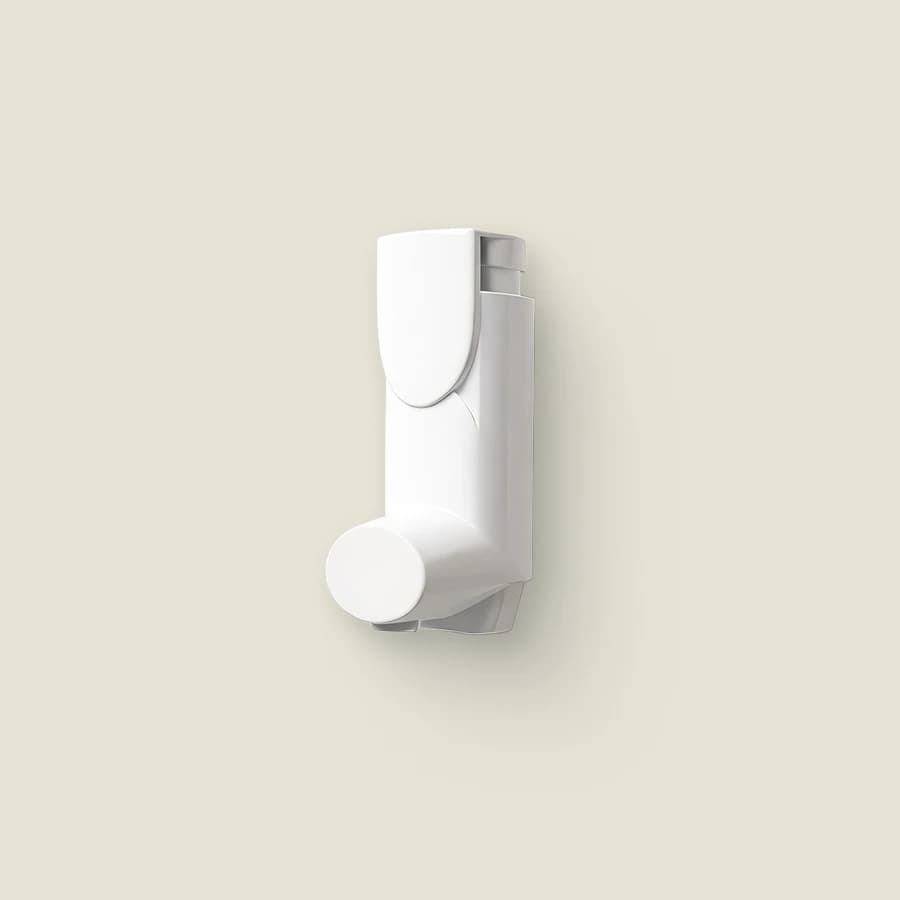
Airsupra®(albuterol/budesonide)
Savings at a Glance
This is an out-of-pocket price. If you have insurance, check your co-pay first—it may be even lower. Select your form and strength to see your savings.
How It Works
AstraZeneca manages direct patient orders through AstraZeneca Direct. AstraZeneca Direct will guide you through eligibility and offers delivery options.
For support call 1-888-898-0545 (8:30 AM - 9 PM ET, Monday through Friday)
Drug Details
- SABA medicines such as albuterol help to relax the smooth muscles of the airways, causing the airways to widen, leading to easier breathing.
- ICS medicines such as budesonide help to decrease inflammation in the lungs. Inflammation in the lungs can lead to breathing difficulties.
- AIRSUPRA is a prescription medicine used:
- AIRSUPRA is used as 2 inhalations (puffs) as needed. Do not use more than 12 inhalations (puffs) in a 24-hour period.
- AIRSUPRA is not to be used as maintenance treatment for asthma. If you are currently taking medicine long-term to maintain control of asthma symptoms, you should continue to take that medicine as directed by your healthcare provider.
- It is not known if AIRSUPRA is safe and effective in children.
AIRSUPRA combines 2 medicines, a short/rapid-acting beta2-adrenergic agonist (SABA) medicine (albuterol sulfate) and an inhaled corticosteroid (ICS) medicine (budesonide), in 1 inhaler, delivered as a propelled spray.
◦ as needed as a rescue inhaler to treat or prevent symptoms of asthma (tightening of the airways, wheezing, cough, and shortness of breath).
◦ to help prevent sudden severe breathing problems (asthma attacks).
- are allergic to albuterol sulfate, budesonide, or any of the other ingredients in AIRSUPRA. See the end of this Patient Information leaflet for a complete list of ingredients in AIRSUPRA.
- have heart problems.
- have high blood pressure (hypertension).
- have convulsions (seizures).
- have thyroid problems.
- have diabetes.
- have low potassium levels in your blood.
- have an immune system problem.
- have or had tuberculosis of your respiratory tract.
- have had any type of viral, bacterial, parasitic, fungal infection, or herpes simplex infection of the eye (ocular herpes simplex) that has not been treated.
- have been exposed to chickenpox or measles or you have not received vaccines against these diseases.
- have or are at risk for weak bones. You are at risk for weak bones if you:
- have eye problems such as increased pressure in the eye, glaucoma, or cataracts.
- have liver problems.
- are pregnant or plan to become pregnant. It is not known if AIRSUPRA may harm your unborn baby.
- are breastfeeding. It is not known if the medicines in AIRSUPRA pass into your breast milk and if they can harm your baby. You and your healthcare provider should decide if you will take AIRSUPRA while breastfeeding.
- medicines known as strong CYP3A4 inhibitors
- diuretics
- other inhaled medicines or asthma medicines
- digoxin
- beta blockers
- monoamine oxidase inhibitors
- tricyclic antidepressants
◦ are inactive for a long period of time.
◦ have a family history of osteoporosis.
◦ are a woman going through menopause (“the change of life”) or are past menopause.
◦ smoke or use tobacco.
◦ are elderly.
◦ do not eat well (poor nutrition).
◦ use medicines that cause bone thinning (such as seizure medicines or corticosteroids) for a long time.
◦ Pregnancy Registry. There is a pregnancy registry for women who use asthma medicines during pregnancy. If you become pregnant, contact the MotherToBaby Pregnancy Studies conducted by the Organization of Teratology Information Specialists at 1-877-311-8972 or visit http://mothertobaby.org/pregnancy-studies/.
Tell your healthcare provider about all the medicines you take, including prescription and over-the-counter medicines, vitamins, and herbal supplements. AIRSUPRA and certain other medicines may affect each other causing side effects.
Especially, tell your healthcare provider if you take:
Ask your healthcare provider or pharmacist for a list of these medicines, if you are not sure.
Know the medicines that you take. Keep a list of them to show your healthcare provider and pharmacist each time you get a new medicine.
- Before using AIRSUPRA, make sure your healthcare provider has taught you how to use the inhaler and that you understand how to use it correctly.
- Use AIRSUPRA exactly as your healthcare provider tells you to use it. Do not use AIRSUPRA more often than prescribed (no more than 12 puffs which equals 6 doses) within a 24-hour period.
- Do not change or stop other inhaled medicines or asthma medicines (oral or inhaled) without first talking to your healthcare provider.
- Call your healthcare provider or get emergency medical care right away if:
Read the step-by-step instructions for using AIRSUPRA at the end of this Patient Information leaflet.
◦ your breathing problems get worse.
◦ you need to use AIRSUPRA more often than usual.
◦ AIRSUPRA does not work as well to relieve your asthma.
- worsening trouble breathing, coughing, and wheezing (paradoxical bronchospasm). If this happens, stop using AIRSUPRA and call your healthcare provider or get emergency medical care right away. Paradoxical bronchospasm is more likely to happen with your first use of a new canister of medicine.
- heart problems, including faster heart rate and higher blood pressure.
- possible death in people who use too much AIRSUPRA.
- serious allergic reactions. Tell your healthcare provider or get emergency medical care right away if you have:
- changes in laboratory blood levels. Low levels of potassium (hypokalemia) may cause abnormal heart rhythms. Your healthcare provider may do blood tests to check your potassium levels during treatment with AIRSUPRA.
- weakened immune system and increased chance of getting infections. Tell your healthcare provider about any signs and symptoms of infection including:
- fungal infection in your mouth and throat (thrush). This is a common side effect. Rinse your mouth with water, if available, without swallowing after using AIRSUPRA to help reduce your chance of getting thrush.
- reduced adrenal function (adrenal insufficiency). Adrenal insufficiency is a condition in which the adrenal glands do not make enough steroid hormones. This can happen when you start taking a medicine containing an ICS (such as AIRSUPRA). When your body is under stress from fever, trauma (such as a car accident), infection or surgery, adrenal insufficiency can get worse.
- bone thinning or weakness (osteoporosis). Your healthcare provider should check you for this during treatment with AIRSUPRA.
- eye problems, including glaucoma and cataracts. You should have regular eye exams while using AIRSUPRA.
- headache
- cough
- hoarseness
AIRSUPRA can cause serious side effects, including:
◦ skin rash, redness, or swelling
◦ severe itching
◦ swelling of the face, mouth, and tongue
◦ trouble breathing or swallowing
◦ chest pain
◦ fever ◦ aches ◦ feeling tired
◦ pain ◦ chills ◦ nausea and vomiting
Symptoms of adrenal insufficiency include:
◦ feeling tired ◦ weakness ◦ low blood pressure
◦ lack of energy ◦ nausea and vomiting
Call your healthcare provider or get medical help right away if you have symptoms of any of the serious side effects listed above.
Common side effects of AIRSUPRA include:
Tell your healthcare provider about any side effect that bothers you or that does not go away.
These are not all the side effects of AIRSUPRA. For more information, ask your healthcare provider or pharmacist.
Call your doctor for medical advice about side effects. You may report side effects to FDA at 1-800-FDA-1088. You may also report side effects to AstraZeneca at 1-800-236-9933.
- Store AIRSUPRA at room temperature between 68ºF to 77ºF (20°C to 25°C). Keep in a dry place away from heat and sunlight.
- Store AIRSUPRA in the unopened foil pouch and only open when ready for use.
- Do not put a hole in the AIRSUPRA canister.
- Do not use or store AIRSUPRA near heat or a flame. Temperatures above 120ºF (49°C) may cause the canister to burst.
- Do not throw the AIRSUPRA canister into a fire or an incinerator.
- Throw away AIRSUPRA 12 months after you open the foil pouch or when the puff indicator reaches zero “0”, whichever comes first.
Keep AIRSUPRA and all medicines out of the reach of children.
Medicines are sometimes prescribed for purposes other than those listed in a Patient Information leaflet. Do not use AIRSUPRA for a condition for which it was not prescribed. Do not give your AIRSUPRA to other people, even if they have the same condition that you have. It may harm them. You can ask your pharmacist or healthcare provider for information about AIRSUPRA that is written for healthcare professionals.
Active ingredients: micronized albuterol sulfate and micronized budesonide. Inactive ingredients: hydrofluoroalkane (HFA-134a) and porous particles 1,2-Distearoyl-sn-glycero-3-phosphocholine (DSPC) and calcium chloride.
Prices shown are sourced from manufacturer pricing programs and may change without notice. Temi is not responsible for pricing accuracy.